

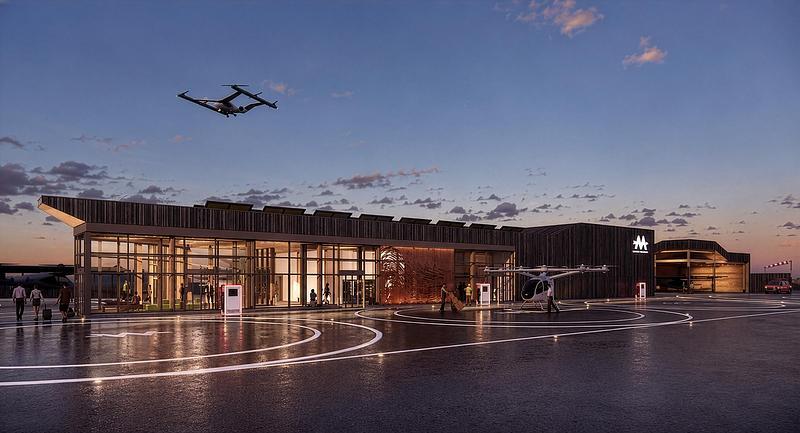

Figurr Architects Collective has partnered with Aureum Mobility to plan and deliver vertiport infrastructure across Canada. Combining aviation architecture with modular Advanced Air Mobility technology, the collaboration addresses a part of future aviation that often receives less attention than the aircraft themselves: the physical spaces where electric aircraft and drones will land, recharge, transfer passengers, and connect with existing transport networks.
Architecture for a New Aviation Network
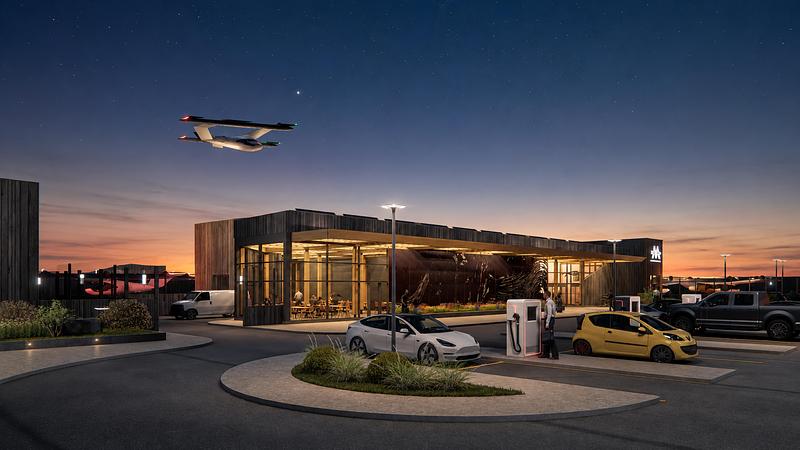

Advanced Air Mobility could support passenger travel, emergency response, medical delivery, cargo logistics, and connections to remote communities. However, these services will require more than designated landing pads. A functioning vertiport must coordinate aircraft operations, passenger circulation, charging equipment, maintenance areas, safety procedures, and ground transportation within a carefully organized environment.
The partnership positions architecture as an operational framework rather than a visual backdrop. Vertiports may need to fit into airports, dense urban districts, suburban developments, or isolated communities, with every context introducing different questions about access, noise, security, weather protection, and surrounding infrastructure. A successful model must therefore remain adaptable without losing its underlying technical logic.
Modular Systems for Different Locations

Aureum Mobility contributes modular droneport and vertiport systems designed to serve different aircraft manufacturers and operating requirements. Its agnostic charging technology is intended to reduce dependence on a single vehicle platform, allowing infrastructure to evolve as aircraft technology and industry standards continue to develop.
This modular approach could be particularly relevant in Canada, where travel conditions range from metropolitan transport networks to remote regions with limited road access. Rather than applying one identical facility everywhere, the system can be adjusted for rural drone operations, emergency-service bases, airport connections, or more complex urban passenger hubs. Scalability also gives communities the option to begin with a limited facility and expand it as demand develops.
Connecting Technology with Place
Figurr Architects Collective brings experience designing aviation environments for airlines, airports, simulator manufacturers, defense organizations, and corporate flight-training providers. That background provides an understanding of the technical requirements and human factors that influence how aviation buildings operate, from secure circulation and regulatory compliance to maintenance access and passenger orientation.
The partners will offer feasibility studies, site selection, due diligence, master planning, architectural design, permitting assistance, and integration with airports or urban developments. These early planning services are important because the usefulness of a vertiport depends heavily on its location. A technologically advanced facility may still perform poorly if it lacks practical links to communities, emergency networks, public transport, or other everyday destinations.
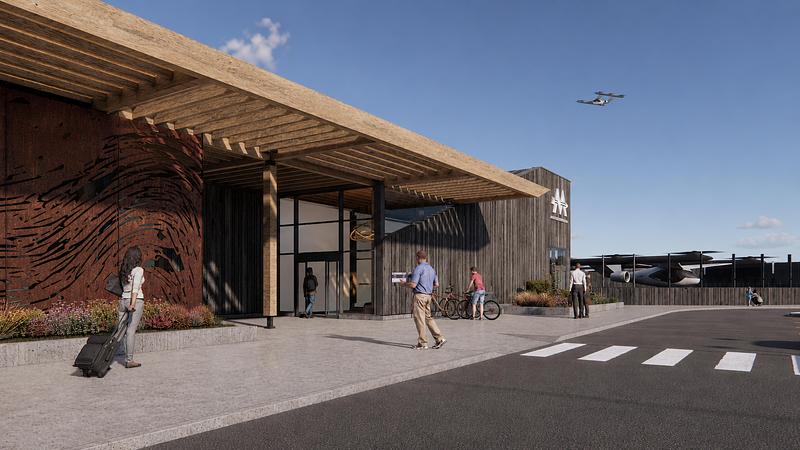
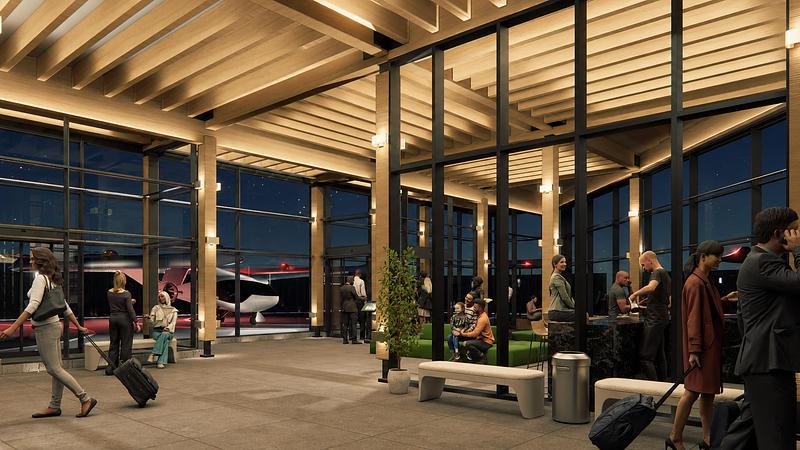
The initiative also raises broader urban-design questions. Vertiports could become visible mobility hubs with public entrances, waiting areas, servicing zones, and energy infrastructure. Their design will need to manage the boundary between specialized aviation operations and the surrounding public realm while responding to local climate, land-use regulations, accessibility standards, and community expectations.
Preparing Canada for Advanced Air Mobility
The collaboration arrives as electric aircraft, drones, and autonomous aerial systems move closer to commercial deployment. The Canadian Advanced Air Mobility organization has emphasized that operationally ready infrastructure will be essential for turning experimental aircraft into inclusive transportation services. Canada’s vast geography and dispersed communities make it a useful testing ground for whether AAM can provide meaningful access beyond well-connected urban centers.
There is still uncertainty around adoption timelines, aircraft standards, regulations, and long-term demand. For that reason, flexible planning may be more valuable than highly specialized facilities that are difficult to modify. Modular construction and manufacturer-neutral systems could help reduce this risk, although each location will still require detailed technical and community assessment.
Through their Canadian partnership, Figurr Architects Collective and Aureum Mobility aim to create scalable aviation hubs that connect emerging flight technology with real places and services. The initiative presents the vertiport not simply as a landing platform, but as a new architectural type shaped by mobility, energy, safety, and public access.
Partnership Technical Sheet
| Category | Details |
|---|---|
| Initiative | Canadian droneport and vertiport infrastructure partnership |
| Architecture Partner | Figurr Architects Collective |
| Technology Partner | Aureum Mobility |
| Announcement Location | Montreal, Canada |
| Geographic Coverage | Canada |
| Infrastructure Types | Vertiports and droneports |
| Potential Applications | Passenger transport, medical services, emergency response, cargo logistics, and remote-community connectivity |
| Core Services | Feasibility studies, site selection, due diligence, master planning, architecture, permitting support, and project delivery |
| Technology | Modular infrastructure systems and aircraft-agnostic charging technology |
| Integration | Airports, urban developments, regional transport networks, and rural operations |
| Announcement Date | September 3, 2026 |