


Introduction
As in the summer months when temps go up Homeowners tend to open the windows for a flow of fresh air, which in turn reduces indoor heat. While windows are key players in this natural ventilation process, screens, which go in them, are also very important for airflow, comfort, and indoor air quality. Proper maintenance of screens is a must, which in turn keeps out insects, debris, and dust.
However, in many cases homeowners ignore the state of their window screens until they notice the airflow has weakened greatly or they get that stuffy feeling inside. By knowing what role window screens play in terms of ventilation, homeowners may improve comfort, reduce energy use, and at the same time see to it that their indoor environment is healthier during the warmer months.
The Purpose of Window Screens
Window screens are put in to act as a protective gate between indoor and outdoor areas. They mainly let in fresh air while keeping out insects, leaves, pollen, and debris that get into the home. In the spring and summer screens also play a large role in the home environment by which homeowners can take advantage of natural ventilation and at the same time also feel protected from the outside elements.
Today it is seen that what is used to make screens is of aluminum, fiberglass, or stainless steel mesh. What each material brings to the table in terms of durability, visibility, and air flow performance varies. As for what type you choose, all screens do in fact play a role in how air moves through a window.
Although it may seem that screens are simple in design, the mesh pattern they present does in fact slow down incoming air flow. It is seen that clean and well-installed screens minimize this resistance but also that those which are dirty or damaged greatly reduce ventilation efficiency.
How Screens Influence Airflow
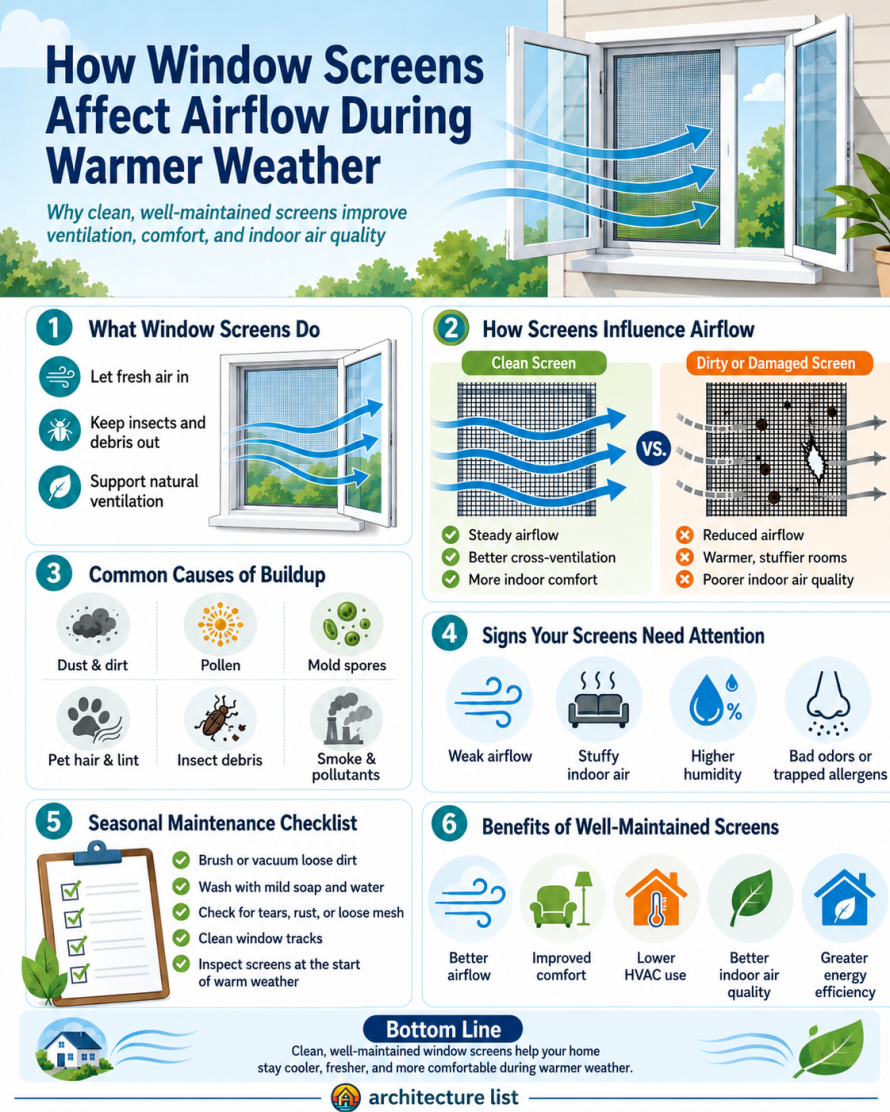
Air flow is based on how well air goes through the screen mesh. Screen pores allow for air movement and also play a role in filtering out particles and insects. If screens are clean of damage, airflow will be very consistent and comfortable.
Over time what is observed is the gradual accumulation of dust, pollen, pet hair, and outdoor contaminants on the mesh. This in turn causes a reduction in airflow, which in turn decreases indoor air circulation. Also, homeowners may see that rooms are getting warmer and more humid even with windows left open.
During warm weather, proper airflow is key, which in turn helps to get rid of indoor heat and stale air. Also, good ventilation may reduce use of air conditioners and, at the same time, improve overall indoor comfort.
In homes that have many open windows, cross-ventilation works better when screens are clean. Cross ventilation is when fresh air enters through one window and exits through another, which in turn produces continuous air circulation throughout the home.
The Impact of Dirty Screens
During warm weather it is seen that which is at the root of low airflow is dirty window screens. Also fine particles get in and clog the mesh, which in turn reduces the amount of air that passes through.
Common sources of buildup include:
- Dust and dirt from nearby roads
- Pollen during spring and summer
- Mold spores and moisture residue
- Pet hair and lint
- Insect debris
- Smoke and airborne pollutants
As these materials accumulate, homeowners may see that their rooms are stuffy, that the indoor temperature is going up, or that they are bothered by bad smells from still air. In serious cases clogged screens have played a role in poor indoor air quality, by which allergens and moisture are trapped near window areas.
Regularly cleaning is a must for proper air flow. Screens should be removed at periodic intervals and washed with mild soap and water, which in turn will restore ventilation efficiency and improve indoor comfort.
Damaged Screens and Ventilation Problems
Screens that are damaged also play a role in affecting airflow and comfort. Tears, bent frames, loose mesh, or warped screen panels create unequal ventilation patterns and cause dropped screen performance.
For instance, it is seen that screens that have broken mesh may block airflow in some areas of the window, and at the same time, they allow insects and debris to enter via damaged parts. Also frames that are out of true may cause screens to not fit in tight against the window frame, which in turn causes noise in wind and overall reduced performance.
Small at first may be large issues that over time grow bigger with weather exposure and use. In warm weather storms, intense sun, and humidity, it is seen that screen materials break down and wear out at a faster rate.
Season at large, it is found that homeowners who do the inspection of their homes at that time are able to see issues before they grow into large repair jobs. Also, it is noted that what is put in the category of routine maintenance, like replacing worn-out screens, actually does, in fact, improve airflow in the home as well as protect it from pests and outside debris.
Seasonal Maintenance for Better Airflow
Routine upkeep of your screens is key to maintaining comfortable indoor temps in warmer months. A simple seasonal maintenance routine improves air flow performance and also extends screen life.
Important maintenance tasks include:
Cleaning the Mesh
Screens should be lightly brushed or vacuumed first, which will remove the loose dirt. It is found that a mix of water and mild detergent does the best job in breaking up grime and pollen deposit without the risk of mesh damage.
Checking for Damage
Check for tears, rust, bent corners, or loose edges on the screens. Also, minor damage may be fixed before it gets worse.
Inspecting Window Tracks
In home environments dust and debris in window tracks may also be the cause that prevents proper opening of windows. To improve the home’s ventilation, keep tracks clean.
Monitoring Outdoor Conditions
In areas close to construction sites, busy roads, or large woodlands, homeowners may see more frequent screen cleaning as a requirement because of the greater accumulation of airborne debris.
The Connection Between Screens and Indoor Comfort
Well-maintained screens play a large role in indoor comfort during warm weather. Also, fresh air helps out with the regulation of humidity levels, the removal of odors, and cooling the living space naturally.
Ventilation also reports to better sleep in many homes, as it allows for the circulation of cooler nighttime air inside. Also, rooms that have good airflow are seen to feel much fresher and less humid as opposed to closed-in indoor settings.
Also in that regard, natural ventilation is a great asset, which reduces the load on HVAC systems. When outdoor temperatures are mild, homeowners may use the air conditioning less, which in turn sees them using the windows and screens, which enable proper airflow.
This can also contribute to lower energy use and reduced utility prices in between seasons.
Window and Screen Care Go Hand in Hand
Screens play a large role in how air flows through a space, but the condition of the windows also plays a part in the quality of ventilation. Sooty glass, clogged tracks, or badly kept frames will in turn see the performance of open windows drop off.
Many homeowners include screen care as part of their broader window maintenance routine. Occasional cleaning and inspections help preserve both airflow and appearance. Some homeowners also schedule professional window washing in Granbury TX as part of seasonal home maintenance to keep windows and screens functioning properly throughout warmer weather.
Combining the care of windows with routine screen maintenance will in turn improve airflow, which also brings better visual appeal to the home.
Improving Long-Term Screen Performance
Home owners looking to see improvements in the long term with their air flow should look into upgrading old or damaged screens. It is seen that in recent years screen materials have been improved, which, in addition to better visibility, also don’t sacrifice insect protection.
High see-through mesh options let in more of the fresh air and sunlight into the home at the same time, there are very durable solutions for long-term outdoor use.
Proper storage also will help out with screen life. In the cold months it is best to keep removable screens in a dry place to avoid warping and moisture damage.
By taking it upon themselves to care for screens and windows, homeowners see the benefits of better indoor air quality, improved comfort, and better ventilation, which is noticed in the middle of the summer.
Conclusion
Window screens do more for home comfort than one may think. In warmer months, it is seen how proper care and cleaning of the screens improve air flow, reduce indoor heat, and, at the same time, better the quality of air they breathe in their homes.
Dust accumulation, clogged mesh, and worn-out screens may reduce airflow, which in turn will make indoor comfort poor. By doing routine seasonal care, screens are helped to perform better and also increase their life.
Through the use of regular screen cleaning and early repair of the small issues, homeowners may see better quality air, greater energy efficiency, and, in all seasons, the most comfortable home environment.