

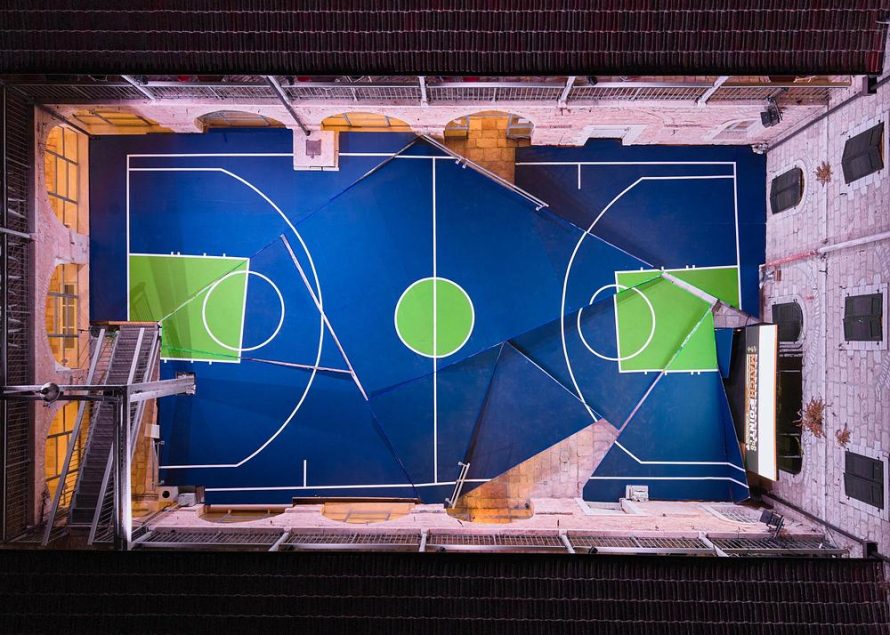

Jerusalem Design Week returned to the historic Hansen House from July 9-16, 2026, bringing together more than 100 designers, artists, and architects. Titled Match Point, its fifteenth edition used competitive sport as a lens through which to examine identity, belonging, power, discipline, and collective culture.
Instead of treating sport simply as entertainment, the event explored the systems of meaning built around it. Uniforms, flags, team colors, trophies, medals, and performance data became design objects that reveal how individuals position themselves within a group and how societies define victory or failure.
Sport as a Cultural Design System
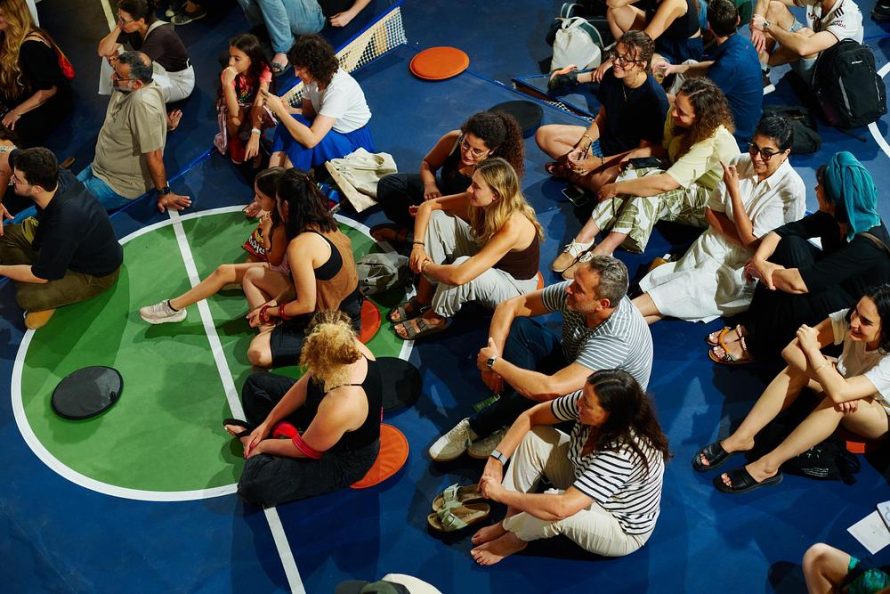

Sport has developed its own complex visual and material language. A team shirt can represent a city, community, or political identity, while a medal can transform a physical achievement into a permanent cultural symbol. Through its exhibitions, Jerusalem Design Week considered how these familiar objects influence the way people understand success and belonging.
The program also addressed the expanding role of monitoring technologies. Sensors, cameras, scoreboards, and performance-tracking devices translate human movement into measurable information. This process can help improve performance, but it also changes the body from something observed into something continuously compared, evaluated, and judged.
Chief curators Sonja Olitsky and Roni Azgad Hamburger encouraged participating designers to question what sustains morale, why people constantly search for encouragement, and how glory is represented. These questions gave the event a critical dimension, extending its focus beyond sporting equipment and visual identity.
Pit Examines the Architecture of Spectatorship
At the center of the program was Pit, an exhibition created by HQ Architects. The installation investigated the emotional and spatial conditions of sporting arenas, including the relationship between spectators, competitors, and the architecture that brings them together.
Stadiums and arenas are designed not only to provide views of an event but also to intensify collective experience. Seating arrangements, circulation routes, barriers, lighting, and acoustics can turn separate visitors into a unified audience. Pit highlighted how design contributes to the psychological intensity generated by competition.
This approach positioned spectatorship as an active form of participation. Cheers, gestures, colors, and coordinated movement influence the atmosphere of a match, demonstrating that the audience is part of the event rather than a passive observer.
Objects That Define Victory and Glory
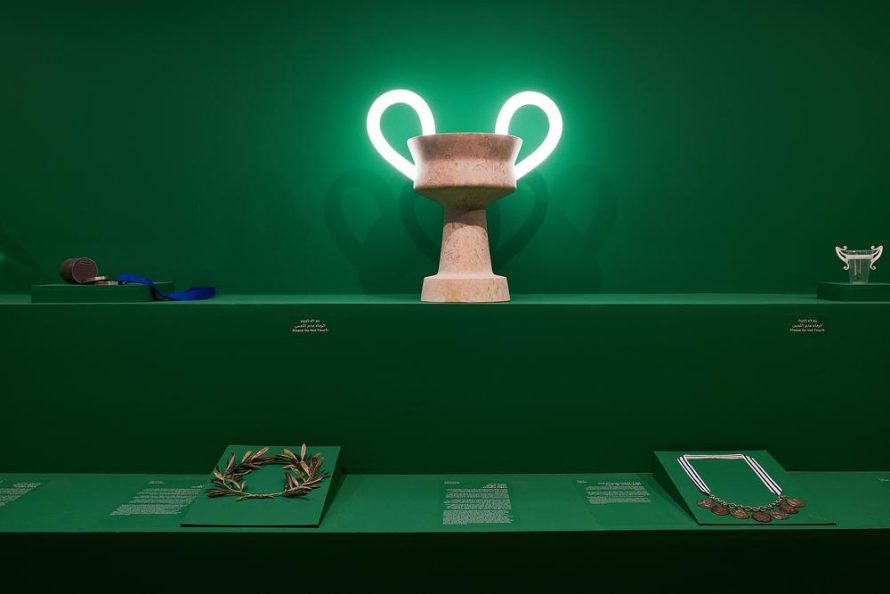
The Hall of Fame exhibition examined how trophies, medals, ribbons, and commemorative objects give physical form to victory. Works by international and Israeli designers, including Bina Baitel, Carla Rataus, and Ron Yosef, presented achievement as something that can be celebrated, questioned, shared, or contested.
Rather than offering a single image of triumph, the exhibition revealed its emotional complexity. Glory may be humorous or solemn, collective or personal, permanent or short-lived. By reinterpreting familiar symbols of achievement, the designers showed that victory depends heavily on cultural context and personal experience.
Another initiative, The Matchmaker, was developed under the artistic direction of Itay Yaakov. It paired Jerusalem-based designers with local football fans to document the city’s sporting material culture through clothing, fan objects, graphic design, and photography.
Hansen House Becomes a Collective Arena
Additional installations included All Eyes on You by Tokyo-based architecture studio NOIZ, alongside works by Ortal Barel, Micky Keidar, Merav Ofri Vax, Alexander Frukht, and collaborators from the Bezalel Academy of Arts and Design. Together, these projects expanded the theme across architecture, art, product design, and visual communication.
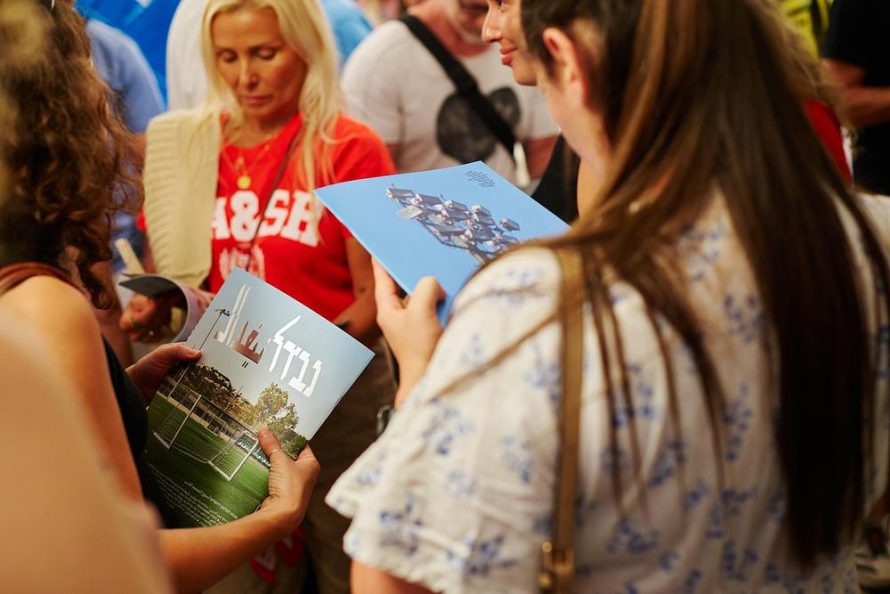
Lectures, performances, screenings, workshops, conversations, and guided tours complemented the exhibitions. This public program transformed Hansen House into a meeting place for designers, researchers, artists, athletes, musicians, and visitors, allowing ideas from the installations to continue through direct discussion and shared experience.
Through Match Point, Jerusalem Design Week demonstrated that sport is also a designed cultural environment. Its objects, spaces, symbols, and rituals shape how societies understand competition, resilience, community, and recognition. The open call for the event’s 2027 edition is scheduled to be announced in December 2026.
| Technical Sheet | |
|---|---|
| Event | Jerusalem Design Week 2026: Match Point |
| Event Type | Contemporary design exhibition and public program |
| Dates | July 9-16, 2026 |
| Location | Hansen House, 14 Gedalyahu Alon Street, Jerusalem, Israel |
| Chief Curators | Sonja Olitsky and Roni Azgad Hamburger |
| Assistant Curators | Anat Tina Levi and Roni Yeheskel |
| General Management | Smadar Tsook, Ran Wolf, and Ran Wolf Ltd. |
| Event Program Artistic Director | Yuval Mendelson |
| Exhibition Design | Noam Bar |
| Content and Marketing | Ofer Getz |
| Technical Administration | Asaf Sabag |
| Office Administration | Alma Schwebel |
| Graphic Design | The League and Studio Perks & Such |
| Featured Exhibition | Pit by HQ Architects |
| Participants | More than 100 designers, artists, and architects |
| Initiators | Ministry of Jerusalem and Jerusalem Development Authority |
| Production | Hansen House and Ran Wolf Ltd. |