


In Kayonza, Rwanda, the Komera Leadership Center brings education, health services, and community life beneath a shared roof. Designed by BE_Design, the facility supports young women through learning and mentorship while accommodating family development programs and local gatherings. Its architecture makes room for those overlapping roles through adaptable interiors, sheltered outdoor spaces, and materials connected to the surrounding region.
A Community Hub Along the Main Road


Positioned on the main road opposite the village football pitch, the center sits alongside an established setting for public life. This location gives its varied activities a common address: counseling, classes, meals, and community meetings all belong within the same architectural framework.
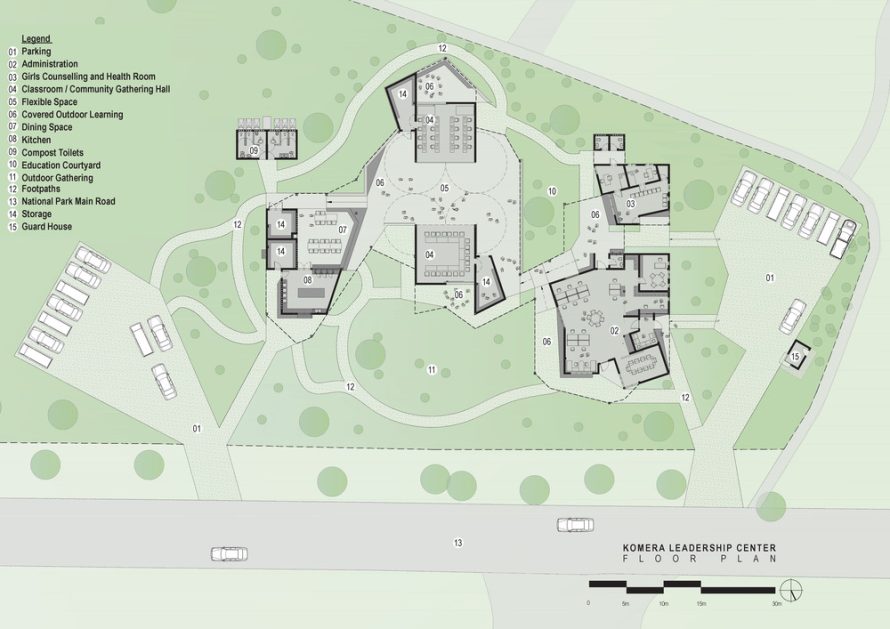
The program combines administration, health, and counseling facilities with classrooms, gathering areas, a kitchen, and dining spaces. Bringing these functions together allows the building to serve both organized programs and the informal conversations that happen around them. The design treats those everyday encounters as part of the center’s purpose.
Three Classrooms, One Adaptable Gathering Space
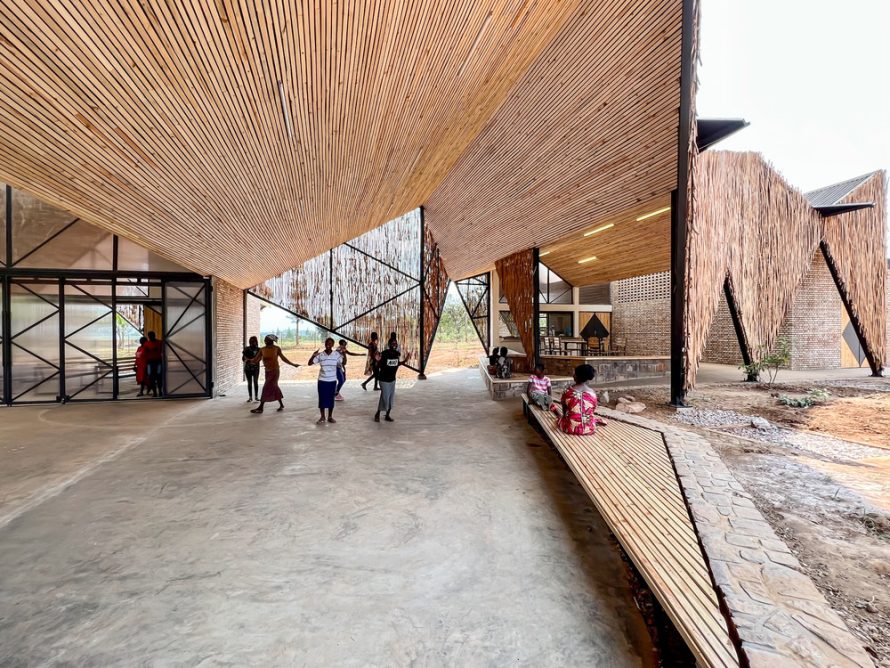
At the center of the plan, hinged translucent panels change how the main room can be used. Closed, they divide it into three classrooms. Opened to 90 degrees, they create a larger meeting hall. Rotated fully to 270 degrees, they allow the space to accommodate performances, ceremonies, and other larger events.
This arrangement gives one central space several distinct roles. A room configured for teaching can become a collective setting when the program changes. Adjacent storage supports these transformations, providing room for the equipment and furnishings associated with different activities. That practical provision is as important to flexibility as the moving panels themselves.
Imigongo Patterns Shape Roofs and Screens

The roof forms, brick patterns, and woven eucalyptus screens draw inspiration from Imigongo, a traditional art form originating in the region. Its influence extends across the building’s silhouette and surfaces, giving the architecture a visual connection to local cultural expression.
The name Komera means “to stand strong, and to have courage,” an idea echoed in the project’s expressive forms. Yet these elements also do everyday work. A large connecting roof creates covered outdoor areas for breakout classes and informal meetings, extending the usable program beyond enclosed rooms. Eucalyptus screens shade these spaces while providing enclosure and privacy, helping make the edges of the building places to occupy.
Local Construction as Part of the Program

Working with Rwanda Village Enterprises, the project used locally sourced materials for the vast majority of its construction. A local workforce maintained an average of 40% female representation. Workers received on-site skills training, income and savings accounts, personal protective equipment, and safety equipment, linking the construction process to practical opportunities within the community.
Community contributions informed the project from conception through completion. For BE_Design, the resulting center brings its social purpose into both the construction process and the finished spaces. Its most compelling feature is the relationship between them: a locally built facility that can keep changing its arrangement to accommodate learning, support, and collective life.
| Project | Komera Leadership Center |
|---|---|
| Location | Kayonza, Eastern Province, Rwanda |
| Architect | BE_Design |
| Project Type | Community and education center |
| Construction Collaborator | Rwanda Village Enterprises (RVE) |
| Main Functions | Education, mentorship, health and counseling, family development, community gatherings, administration, kitchen, and dining |
| Key Materials and Elements | Brick, woven eucalyptus screens, hinged translucent panels |
| Spatial Adaptability | Three classrooms, meeting hall, or larger event space |
| Design Inspiration | Traditional regional Imigongo art |
| Local Workforce | Average 40% female representation; on-site skills training |