

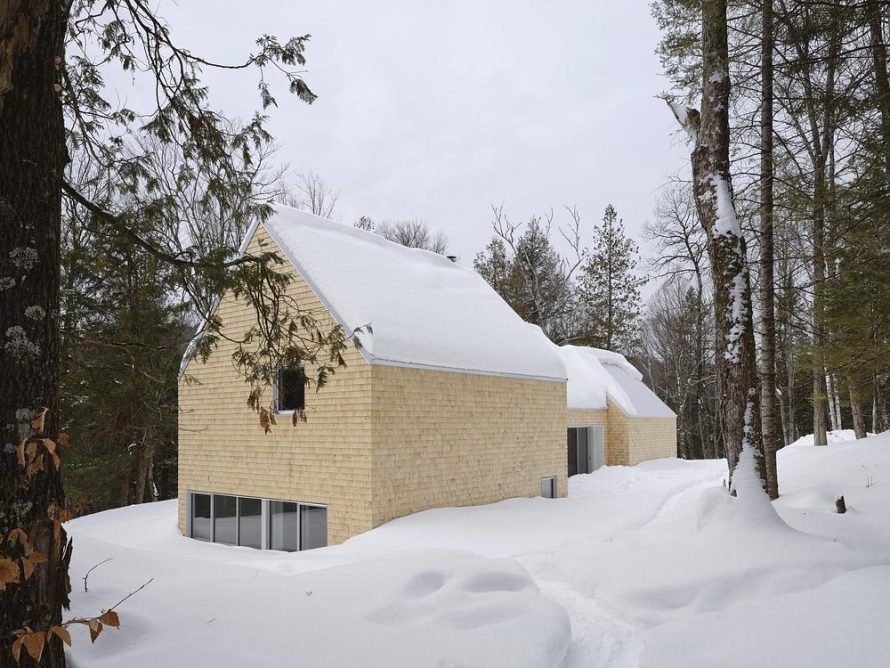

La Maraude, designed by Nathalie Thibodeau architecte, offers a thoughtful reinterpretation of Quebec’s vernacular architecture, balancing simplicity, durability, and a deep connection to nature. Located in the Municipality of Boileau, Canada, the project reflects Nathalie Thibodeau architecte’s ongoing exploration of how architecture can quietly respond to both landscape and identity.
A House That Steps Back to Belong

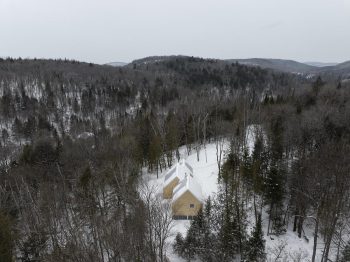
Rather than claiming the most obvious position along the Maskinonge River, La Maraude deliberately withdraws into the forest. This decision defines the project’s core philosophy: architecture should not dominate but coexist. The house becomes part of a broader spatial strategy, where multiple small retreats are envisioned across the site, allowing each occupant to create their own personal sanctuary.
This distributed approach transforms the property into more than a single residence. It evolves into a layered landscape of experiences, with the main house acting as a base camp rather than the final destination. The result is a subtle but powerful shift in how domestic space is perceived and used.
Reinterpreting Vernacular Forms

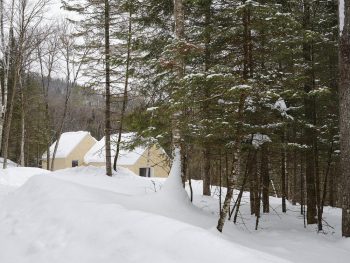
The design language draws directly from Quebec vernacular architecture, expressed through simple rectangular volumes and steep gable roofs. These forms are not nostalgic replicas but functional responses to climate, particularly the need to manage heavy snow accumulation efficiently.
Material choices reinforce this continuity. Natural cedar shingles and a metal roof create a durable exterior envelope while maintaining a strong visual connection to regional traditions. The restrained palette avoids unnecessary gestures, allowing the building to age gracefully within its forested surroundings.
Three Volumes, One Cohesive Experience

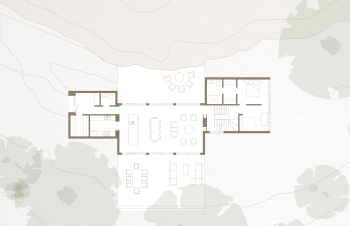
The house is composed of three distinct volumes, each carefully programmed to create a gradient of privacy. The first pavilion, compact and functional, contains the entrance and service areas. Its controlled opening frames the arrival experience, offering a focused transition from exterior to interior.
The central volume expands dramatically, housing the main living spaces. High ceilings and generous glazing establish a continuous visual dialogue with the forest. Light penetrates deeply into the interior, shifting throughout the day and across seasons, reinforcing a sense of immersion in nature.
Terraces extend this experience outward. A north-facing terrace offers a more sheltered and intimate setting oriented toward the mountain, while the southern terrace opens broadly toward the descending landscape and river, capturing sunlight and expansive views.
Intimacy Through Landscape Framing
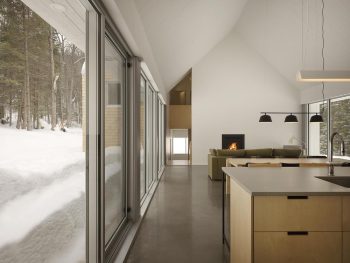
The third pavilion, dedicated to the bedrooms, introduces a more introspective atmosphere. Built over two levels due to the site’s topography, it features carefully positioned openings that frame specific views rather than exposing the entirety of the landscape.
This controlled relationship with the exterior creates a series of evolving scenes, where the forest becomes a living backdrop. Seasonal changes are not just visible but actively composed, turning everyday moments into spatial experiences shaped by light, shadow, and time.
Ultimately, La Maraude demonstrates how contemporary architecture can remain grounded in tradition without becoming static. Through its clarity of form, sensitivity to context, and restrained materiality, Nathalie Thibodeau architecte delivers a project that quietly elevates the act of dwelling.
| Project Name | La Maraude |
|---|---|
| Location | Municipality of Boileau, Canada |
| Architect | Nathalie Thibodeau architecte |
| Year | 2026 |
| Typology | Residential Architecture |
| General Contractor | Construction Miric |
| Millwork | La Cime Ebenisterie |
| Exterior Cedar | SBC Cedar |
| Windows | Fabelta |
| Photography | Maxime Brouillet |
| Google Maps | View Location |