

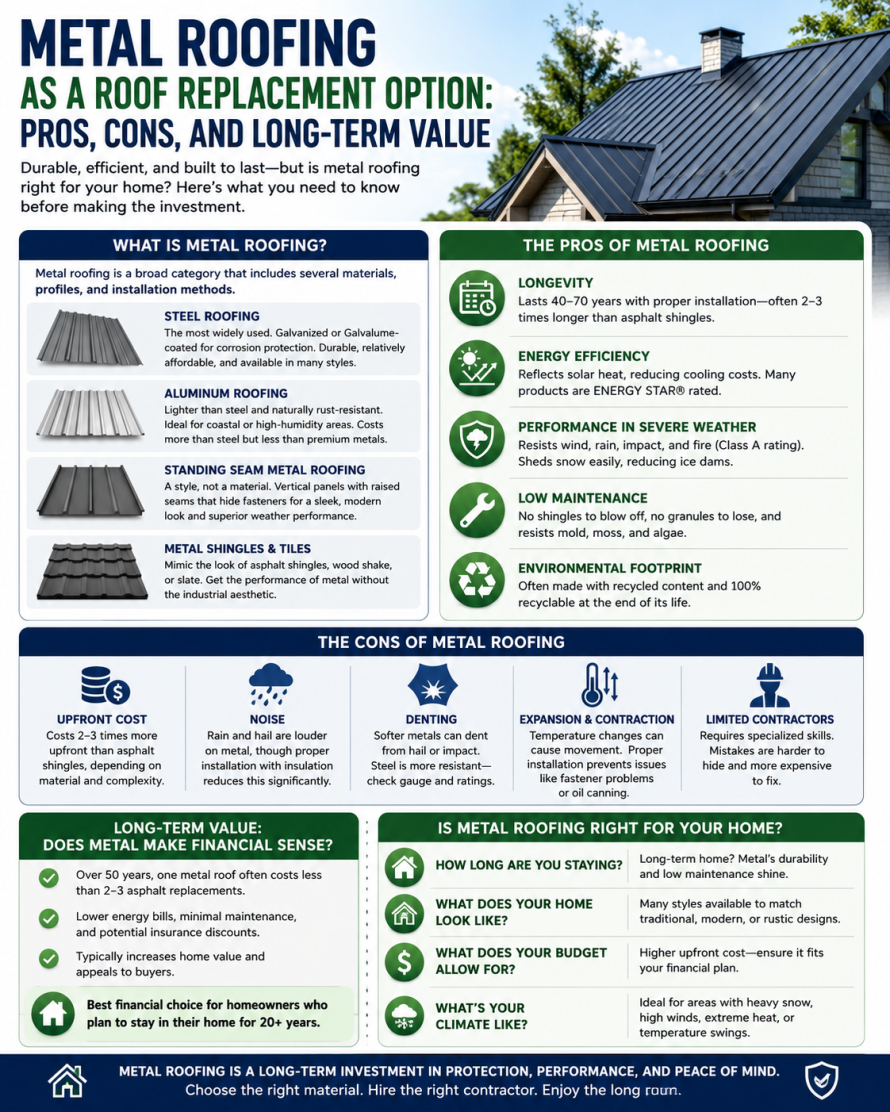

When a homeowner starts researching a roof replacement, metal roofing tends to come up early in the conversation. And for good reason. Over the past decade, metal has gone from a niche material associated mostly with barns and commercial buildings to a legitimate, popular option for residential homes across the country.
But is it the right choice for your home? That depends on a lot of factors. Budget, location, home style, how long you plan to stay in the house, and what you’re hoping to get out of the investment all play a role in that decision.
This guide breaks down the honest pros and cons of metal roofing, how it holds up over time, and what you should know before committing to it.
What Is Metal Roofing, Exactly?
Metal roofing is not one product. It’s a broad category that includes several different materials, profiles, and installation methods.
The most common types you’ll encounter are:
Steel roofing is the most widely used. It comes in galvanized or Galvalume versions, which means it’s coated in zinc or a zinc-aluminum alloy to protect against corrosion. Steel panels and shingles are durable, relatively affordable for metal, and available in a wide range of styles.
Aluminum roofing is lighter than steel and naturally resistant to rust, making it a solid choice for coastal homes or areas with high humidity. It tends to cost more than steel but less than premium metals.
Standing seam metal roofing is a style, not a material. It features vertical panels with raised seams that interlock, hiding the fasteners completely. This is the sleek, modern-looking metal roof you’ve probably seen on newer homes or upscale renovations.
Metal shingles and tiles are designed to mimic the look of asphalt shingles, wood shake, or even slate. If you want the performance of metal without the industrial aesthetic, these are worth considering.
The Pros of Metal Roofing
Longevity
This is the biggest argument in metal’s favor. A quality asphalt shingle roof typically lasts 20 to 30 years depending on the product tier, climate, and maintenance. A properly installed metal roof can last 40 to 70 years, with some premium systems carrying manufacturer warranties that exceed 50 years.
For homeowners who plan to stay in their house long-term, or who want to make one big investment and not think about it again for decades, the math on metal starts to look pretty compelling.
Energy Efficiency
Metal roofs reflect solar radiation rather than absorbing it. On a hot summer day, that difference can be significant. Some homeowners report a noticeable drop in cooling costs after switching from asphalt to metal, particularly in sun-exposed climates.
Many metal roofing products are also rated by the ENERGY STAR program, which means they meet specific reflectivity and emissivity standards. If energy savings are a priority, look for products that carry that rating.
Performance in Severe Weather
Metal handles wind, rain, and impact better than most other roofing materials. Standing seam systems, in particular, are designed to allow for thermal expansion and contraction, which reduces the likelihood of cracking or buckling over time.
Metal is also non-combustible, giving it a Class A fire rating in most configurations. For homeowners in areas prone to wildfires or dry conditions, that matters.
When it comes to snow and ice, metal’s smooth surface tends to shed snow more efficiently than textured shingles, which can reduce ice dam formation in cold climates.
Low Maintenance
Once installed correctly, metal roofs generally require very little attention. There are no shingles to blow off, no granules to lose, and no organic material to break down and grow moss or algae. An occasional inspection and basic upkeep is usually enough to keep things in good shape for years.
Environmental Footprint
Metal roofing is often made with a percentage of recycled content, and at the end of its life, it can be fully recycled rather than sent to a landfill. Asphalt shingles, by contrast, are one of the largest contributors to construction landfill waste. For homeowners thinking about their environmental impact, this is a genuine advantage.
The Cons of Metal Roofing
Upfront Cost
This is where metal roofing loses some people. The initial investment is substantially higher than asphalt shingles. Depending on the material, roof size, complexity, and your region, a metal roof can cost two to three times more upfront than a standard architectural shingle installation.
For a homeowner who plans to sell within 10 years, it can be hard to recoup that investment through either energy savings or resale value alone, though metal does typically boost curb appeal and appeals to buyers who understand the value.
Noise
Rain on a metal roof is louder than rain on an asphalt roof. This surprises some homeowners, particularly during heavy storms or hailstorms.
That said, most professionally installed metal roofs are installed over solid decking with insulation and underlayment, which dramatically reduces the noise level. It’s still a factor, but it’s far less of an issue than it was with older metal roof systems.
Denting
Softer metals like aluminum can dent from large hail, falling branches, or heavy impacts. Steel is more resistant, but it’s still worth asking your contractor about the gauge of the metal and impact resistance ratings, especially if you live in a region prone to severe hailstorms.
Expansion and Contraction
Metal expands and contracts with temperature changes. On improperly installed roofs, this can lead to fastener issues, oil canning (a wavy appearance in flat metal panels), or noise. A contractor who is experienced with metal roofing will account for this in the installation design, but it’s one reason why choosing the right installer matters as much as choosing the right material.
Limited Contractors
Not every roofing contractor has experience with metal roofing. Installation is more specialized than asphalt, and mistakes are harder to hide and more expensive to fix. You want someone who has actually done it, not someone who is figuring it out on your roof.
Long-Term Value: Does Metal Make Financial Sense?
Let’s talk about the numbers honestly.
If you compare the cost of one metal roof to one asphalt roof, metal loses. But that’s not really the right comparison.
A more accurate comparison looks like this: over a 50-year period, you might replace an asphalt roof two or even three times. Each replacement includes not just materials but labor, tear-off costs, and disposal fees. Add those up across two or three cycles, and the total cost often exceeds what you would have paid for a single metal roof that lasts the entire period.
Add in the energy savings, lower maintenance costs, and potential insurance discounts (some carriers offer lower premiums for metal roofs due to their fire and wind resistance), and the financial case for metal gets stronger over time.
That said, the long-term value argument only holds if you actually stay in the home or if the home’s resale value reflects the upgrade. A metal roof typically increases home value, and it’s a selling point that savvy buyers recognize. But in certain price-sensitive markets, the premium may not fully translate into a higher sale price.
The clearest financial win for metal roofing is for homeowners who:
- Plan to stay in the home for 20 or more years
- Live in climates with extreme temperature swings, heavy snow, or high winds
- Want to minimize long-term maintenance and unexpected repair costs
- Are interested in energy efficiency improvements
Is Metal Roofing Right for Your Home?
The answer varies depending on your specific situation, but here are a few questions worth considering before making the decision.
How long are you planning to stay in the home? If it’s a long-term home, metal’s durability and low maintenance profile make a strong case. If you’re planning to sell in a few years, a quality asphalt product might be a better financial fit.
What does your home look like? Metal roofing comes in a wide range of styles now, but standing seam systems look best on certain architectural styles. A Colonial or Cape Cod might look great with metal shingles designed to mimic slate, while a contemporary home might be a natural fit for a standing seam system.
What does your budget allow for? The higher upfront cost is real. If financing the full cost of metal is going to create financial strain, a high-quality 50-year architectural shingle might be a smarter near-term choice.
What’s your climate like? Homeowners in areas with heavy snow loads, significant wind exposure, or extreme heat tend to see more benefit from metal roofing’s performance characteristics.
Final Thoughts
Metal roofing is not a fad, and it’s not the right choice for every home. But for homeowners who want a roof that performs exceptionally over decades, requires minimal upkeep, and offers strong protection against the elements, it deserves serious consideration.
The key is going in with clear expectations. Know what you’re paying for, understand the installation requirements, and work with a contractor who specializes in metal systems. When it’s done right, a metal roof can be one of the best long-term investments a homeowner makes in their property.