

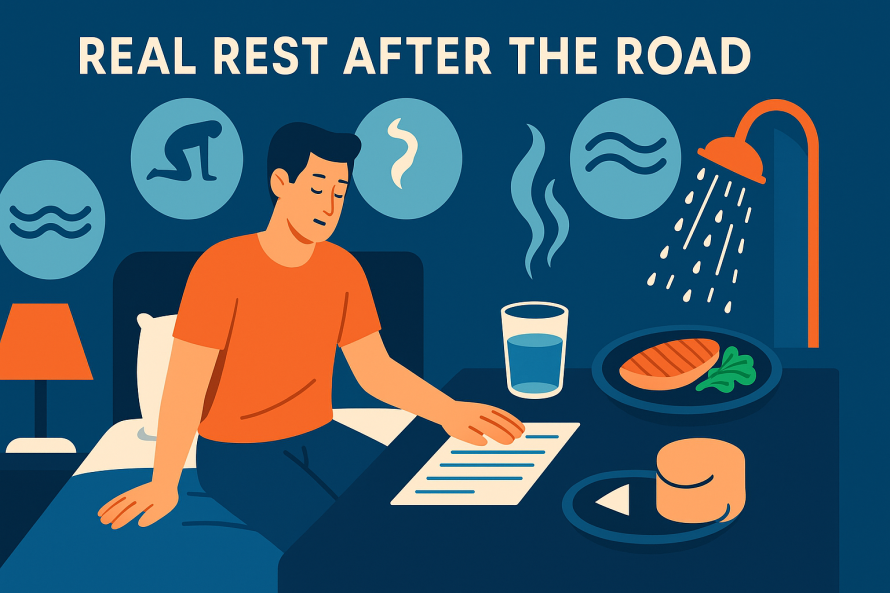

Short answer: to relax after a long day of travel, strip the noise down to seven basics—water, breath, light movement, heat (or cold), a simple meal, a quick mind-dump, and early lights-out. Do them in a small, steady ritual, and your body will downshift fast.
Why Travel Makes You Wired When You’re Tired
Travel is a sneaky kind of stress. You sit for hours, but every sense is on guard—tickets, gates, traffic, new beds, new noises. Your brain wears a metaphorical backpack all day; it’s still strapped on when you finally stop. That’s why you can feel exhausted and overstimulated at the same time. The fix isn’t one miracle hack. It’s a simple, believable routine you can run anywhere—from a quiet hotel to a cousin’s couch—so your body and mind both get the memo: “We’re safe. Powering down now.”
The Quick Starter: A 15-Minute Unwind
If you’ve only got a quarter hour before collapsing, try this:
-
Sip 300–500 ml of water (room temp) with a pinch of salt or a squeeze of citrus. It replaces what planes and air-con stole from you.
-
Box breathing, 3 minutes: inhale 4, hold 4, exhale 4, hold 4. It’s a manual dimmer switch for your nervous system.
-
Easy spinal rinse, 5 minutes: cat-cow on the floor, gentle twists, a slow forward fold. Your back rode in a car seat all day; say thanks.
-
Hot shower or warm washcloth on neck/shoulders, 3–4 minutes. Heat tells muscles to unclench.
-
Phone off, lights low. Don’t let screens sell you fake rest right before bed.
Done? Great. If you’ve got more time—or want something deeper—keep reading.
What Your Body Wants After a Trip
Rehydrate (Smartly)
Dehydration is quiet but ruthless. Flying, long drives, and station food all steal water. Start with plain water, then add electrolytes only if you feel crampy or sluggish. Skip the sugar bombs; they spike you and crash you. Tea is fine. Alcohol is a loan shark—tempting at the counter, expensive later.
Unfold the Map (Light Mobility)
After hours of sitting, your body feels like a folded city map. Unfold it gently:
-
Hips: 90/90 switches or a simple lunge with the rear knee on the ground.
-
Back: slow cat-cow and child’s pose.
-
Neck/shoulders: circles and a doorway chest stretch.
Move slowly enough that your breath stays calm. The goal isn’t a workout; it’s telling the system “nothing to fear.”
Heat or Cold (Pick Your Lane)
Warmth melts tension; a quick cool rinse wakes you up without caffeine. Choose heat (shower, bath, or even a warm towel) if you’re wired. If you’re foggy, try a 30–60 second superb finish at the end of your shower. No heroics. This is about nudging, not shocking.
Eat Real, Not Heavy
Your gut just did a marathon in place. Give it food with edges you can recognize—eggs, rice, soup, grilled fish or tofu, steamed veggies, yogurt, fruit. Skip the “mystery beige” foods that pretend to be a meal but feel like packing peanuts. Authentic beats fake here: you want steady energy, not a bloated plot twist.
A 10-Minute Walk
Outside, if it’s safe, inside if it’s not, walking is nature’s reset button: it pumps your calves (circulation), loosens your spine (mobility), and settles your head (rhythm). If the evening air is good, soak it in; if you’re indoors, pace the hallway with an audiobook.
What Your Mind Needs (That Your Phone Can’t Sell You)
Build a Buffer Zone
Give yourself a 20-minute “arrival window” before decisions and drama. No inbox, no life plans, no deep chats. Just land. Your nervous system will thank you.
Airplane Mode, On Purpose
Leave your phone on airplane mode for 30 minutes after you arrive. It’s a tiny rebellion against the ping economy and keeps strangers’ urgency from hijacking your evening.
Unpack Your Head
Grab paper. Write three lists: Done (what you finished), Parked (what can wait), and Must-do Tomorrow (three items, not thirteen). When thoughts leave your head and sit on paper, they stop shouting.
Real Rest vs. Fake Rest
Scrolling looks like rest, the way a plastic plant looks like life. It fools the eye, not the system. Real rest has weight: breath you can feel, heat that loosens, food you can chew, words on paper. Sprinkle a little fake rest if you like, but don’t expect it to pay the bill by itself.
The 45-Minute Reset (Hotel Room or Home)
00:00–05:00 — Light + Light Snack
-
Water first. If you’re truly hungry, go small: yogurt with fruit, a banana with a spoon of nut butter, or broth and rice.
05:00–12:00 — Heat & Breathe
-
Warm shower. At the end, let water run over your neck for 30 seconds.
-
Then 3 minutes of 4-7-8 breathing (inhale 4, hold 7, exhale 8). It’s like pulling a handbrake on a runaway thought train.
12:00–27:00 — Mobility Circuit
-
Hips: 90/90 for two minutes per side.
-
Back: cat-cow, ten slow reps.
-
Hamstrings: feet on a towel, sliding hamstring curls (or a gentle forward fold).
-
Shoulders: doorway stretch, one minute per side.
27:00–37:00 — Walk or Pace
-
Ten minutes of easy walking. If it’s dark and you’re inside, pace the longest hallway.
37:00–45:00 — Mind-Dump + Lights Low
-
Three lists on paper (Done, Parked, Must-do Tomorrow).
-
Dim the room—lamps over overheads—screens off or at least on night mode. If you have an eye mask, that’s your off-switch.
If You’ve Only Got 10 Minutes (Micro-Reset)
-
Water: five slow sips.
-
Breath: 20 cycles of 4-second inhales and 6-second exhales.
-
Mobility: two favorite stretches, 60 seconds each.
-
Lights: one lamp, not five. Phone face down. That’s it.
Hotel Hacks That Make a Big Difference
-
Pillow engineering: Stack two pillows under your knees if you’re a back sleeper, and hug one between your knees if you’re on your side. This takes pressure off your lower back.
-
DIY lumbar roll: Roll a towel and place it at your belt line when you sit to read. This is instant spine kindness.
-
If there is no light, use the bathroom fan or a white-noise app, and close the blackout curtains fully by clipping them with a pant hanger.
-
Smell matters: a drop of lavender or eucalyptus on a tissue near the bed adds a “real home” signal that hotel rooms lack.
Road-Trip vs. Red-Eye vs. Train Day
After a Road Trip
Your hip flexors and neck took the hit. Spend extra time on lunges and neck circles. Add a few chest-opening moves to undo steering-wheel posture.
After a Red-Eye
You’re dehydrated and circadian-confused. Go heavy on what, light on screens. Get 20 minutes of morning light the next day—free jet-lag medicine.
After a Long Train Day
You likely snacked too often and barely moved. Prioritize the 10-minute walk and a simple, protein-forward meal. Skip dessert tonight; your sleep is the dessert.
The Sleep Stack (Zero Tech, Big Impact)
-
3-2-1 rule: Three hours before bed, no big meals. Two hours, no intense exercise. One hour, no screens.
-
Calm, dark, quiet: your room is a cave with good sheets.
-
Magnesium-rich foods: pumpkin seeds, almonds, leafy greens. (Supplements are optional; whole food is particular.)
Gentle Red Flags (Know When to Go Easy)
If you’re dizzy, overheated, or unusually swollen in the legs, skip hot/cold extremes and heavy stretching; hydrate, rest, and monitor. If pain is sharp or breathing feels off, get help. Rest routines are for the everyday grind, not for emergencies.
Pack Once, Relax Often (Small Kit, Big Comfort)
-
Collapsible water bottle.
-
Eye mask and earplugs.
-
Travel-size lotion or oil (great for a two-minute foot rub that calms your whole body).
-
A tiny notebook and pen.
-
A light scarf (doubles as eye cover or lumbar roll).
-
A few “real food” snacks: nuts, jerky, fruit leather, and herbal tea bags.
The Next Day: A Soft Landing
When morning comes, take a short walk in daylight, even for five minutes. Keep breakfast simple. Don’t schedule a life summit before 10 a.m. Let your system catch up to your suitcase.
One Last Thought
Real rest isn’t a gadget; it’s a rhythm. Travel will always throw curves—delays, detours, surprise couches—but a small, honest ritual makes you bend without breaking. Water, breath, warmth, food you recognize, a page of notes, and lights that get out of the way—that’s how you trade fake relief for the real thing. If you remember anything else, remember this: land first, and decide later. And if you want a name for the whole approach, keep it simple—the betesengiris reset: practical, portable, and yours to keep.