


In the United States, a great variety of architectural styles and shapes have left their mark upon the homes of the country, all inspiring the homebuyers and designers of today.
Log cabins and sod huts
Born on the Midwestern Plains, these types of homes were built from the materials that were available locally. Whether made from sod, stone, handmade adobe bricks or rough-hewn logs, these rustic homes continue to inspire home architects with their practicality and sustainability. They have also been enlarged and expanded in a variety of ways, from massive log cabin-like mansions to the Monterey Colonial design, which is an enlargement of the adobe house.
Prairie School architecture
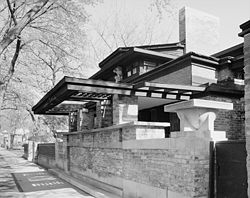
Prairie-style architecture rose to prevalence in the early 20th century and is synonymous with architect Frank Lloyd Wright. Though its original form faded out of popularity in the 1920s, this uniquely American style has become integrated into many current styles of home architecture. The ranch-style home is an example of a descendant of the Prairie School of design, with its open floor plan and low-pitched roof.
The American Foursquare
The American Foursquare home emphasized plain design and simple, handcrafted woodwork, blending elements of the Prairie School and American Craftsman designs. The homes were square in shape, with four large and boxy rooms on each floor. They were two stories high plus a half-story attic, with a large front porch and craftsman-style woodwork.
The American Craftsman bungalow
The quintessential Arts and Crafts home, this common style of home usually features a low-pitch roof, a front porch under an extension of the roof, and deep eaves. Many of these homes were mass-produced in the early 20th century and could be purchased from catalogs as kits.
Consideration when buying a home
Home ownership is, in equal parts, investment and commitment. Prospective buyers will want to consider not only whether they can afford to pay for a home but also if they want to commit to staying put for a period of time. Finding beautiful United States houses for sale may lead emotion to overcome practicality, but keeping a few points in mind will help to ensure that purchasing that elegant Victorian house or comfy bungalow will be an investment in confidence as well as property.
While the design of a home may seem perfect on the exterior, the interior workings of the home may be problematic. Older homes in particular can be prone to electrical issues, as well as wear and tear to the foundations, damage from leaking pipes or the roof, and a host of other potentially expensive problems. Find out as much about the home as possible by employing a home inspector to give the home a thorough go-over.
Knowing something about the neighborhood and terrain is also important. Different architectural styles are better suited to certain geography. Knowing about local geological history can also be invaluable, as a history of earthquakes or flooding in the area can adversely impact house prices and insurances.