

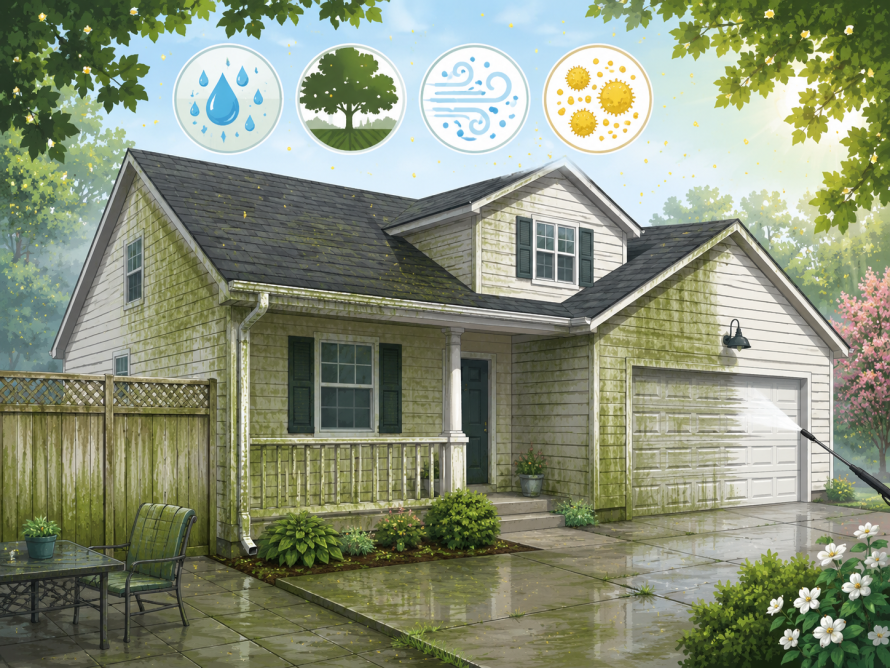

As spring gives way to early summer, many homeowners report that they see green stains, dark streaks, and layers of grime which appeared absent over the winter now present on the outside of their homes. What had looked clean in the cooler months is in sudden contrast to the state of looking dull, dirty, and neglected now. This seasonal build-up is not only an issue of appearance. With the increase in humidity, moisture, pollen, and shade, homeowners see algae, mould, mildew and dirt in a perfect environment in which to grow, which they do very quickly over the exterior of the home.
Homes which are surrounded by trees or in very humid areas are at great risk at present. What homeowners see is that siding, fences, driveways, patios, and roofs are the elements which collect more moisture, which in turn sits for greater lengths of time after rain or morning dew. Over a period of time what happens is that this moisture encourages organic growth and also causes the surfaces to become more difficult to clean if left alone.
In the spring when there is an increase in that green growth which comes with high humidity, it is to the benefit of homeowners to take care of it early and thus avoid larger-scale damage.
Why Humidity Creates the Perfect Conditions for Algae Growth
Humidity is a key player in exterior build-up, which is a result of moisture, which is a primary element algae and mildew need to thrive. In the late spring and early summer the air tends to be warmer and wetter. Also, there is an increase in humidity, which is especially true post rainstorms or early morning dew.
When moisture is present on vinyl siding, wood fencing, and concrete walkways, green algae begin to grow out of control. A common type of green algae which does very well in wet environments will appear as slimy green patches or streaks in the shade of the home.
Unlike in winter when it is dry, which puts growth on hold, in humid weather growth is quick. Also, by the time homeowners notice, which may not be for some weeks, the algae has been at work and large sections of the home will have stained.
Areas most commonly affected include:
- North-facing walls
- Shaded fences
- Concrete driveways
- Deck surfaces
- Gutters and soffits
- Patio furniture
- Roof shingles
Once algae has taken root in porous materials, it is very hard to remove without proper cleaning methods.
The Impact of Pollen During Spring Months
Spring pollen is a factor in more than just allergy issues. Also, it plays a role in the accumulation of grime at home. Pollen particles which stick to the siding, windows, decks, and outdoor furniture in turn produce a yellow or green film on surfaces.
When paired with humidity and moisture, pollen acts almost like food for mould and algae. Also, rainwater may mix pollen with dust and debris, which in turn leaves marks and residue as surfaces dry.
In large lots which have room for large trees or are in woodsy neighbourhoods, there is greater pollen accumulation. Over time this builds up, which in turn causes moisture to be trapped on surfaces and thus mildew and staining.
Many homeowners think that their siding is beyond repair when really what they are dealing with is that layers of pollen and algae and grime have just built up on the surface.
Tree Coverage Can Increase Exterior Moisture Retention
Trees give shade and improve kerb appeal but also at times cause issues which grow in severity during humid weather. Branches which overhang a home don’t allow for proper drying of exterior surfaces, which happens after rain or dew.
Without proper sun exposure, moisture stays on surfaces like siding, fences, roofs, and concrete for great lengths of time. In which, in turn, these wet areas become nurseries for algae, moss and mildew.
Leaves, twigs, and forest products which make contact with gutters or which accumulate by patios and walkways may also be a problem. As they break down, that material causes increased moisture and staining issues.
Homes which have large tree coverage see that issue of buildup come up more quickly in the following:
- Wooden fences
- Roof shingles
- Deck boards
- Driveways
- Brick pathways
- Retaining walls
In these environments regular exterior maintenance is a must as soon as temperatures rise.
How Moisture Affects Different Exterior Surfaces
Moisture affects exterior surfaces differently during spring humidity, causing stains and growth issues.
- Vinyl siding: algae and streaks
- Concrete: absorbs water, becomes slippery
- Wood: mildew and possible rot
- Brick/stone: moss and white stains
Regular cleaning and sealing helps protect surfaces and maintain their appearance and durability over time.
Why Seasonal Buildup Should Not Be Ignored
Some homeowners put off cleaning until it is more extensive, and indeed, which is what happens as the humidity rises; organic growth does become much more apparent in short time periods.
Over time that which is ignored, like algae and grime, leads to the following:
- Permanent staining
- Surface deterioration
- Wood decay
- Slippery walkways
- Reduced kerb appeal
- Premature ageing of exterior materials
Mould and mildew also play a role in poor outdoor air quality around the home. In serious cases what homeowners see is that moisture which is trapped under layers of algae causes damage to surfaces, which in turn increases maintenance costs.
At the beginning of the season it is usually easier and more affordable to clean the buildup as opposed to when the stains have had time to set in.
How Pressure Washing Helps Remove Seasonal Grime
Professional pressure washing is very effective at removing layers of algae, pollen, dirt, and mildew which build up in spring and summer. Also, professional cleaners have the proper cleaning equipment to lift the buildup off of surfaces without the use of harsh scrubbing or damaging chemicals.
Soft wash methods are gentle enough for use on items like siding and roof — professionals also use high pressure for concrete driveways and patios.
Many homeowners schedule seasonal cleaning services to prevent buildup from becoming harder to remove later in the year. Professional exterior house washing in Scarsdale is designed to refresh the look of siding, fences, and walkways as well as protect outdoor surfaces from long-term moisture damage.
Routine cleaning also is an opportunity for homeowners to identify at early stage issues which may become large repairs.
Preventing Green Buildup Around the Home
Although homeowners can do little to change the weather which causes high humidity, they may reduce the issue of excess moisture outside by way of routine maintenance.
Helpful prevention tips include:
- Pruning tree branches to increase light exposure.
- Cleaning gutters regularly
- Washing out pollen in springtime.
- Removing standing water around the property
- Sealing wood surfaces
- Scheduling annual exterior cleaning
These little steps can reduce algae growth and for the most part prevent outdoor surfaces from looking dirty all year.
Final Thoughts
Humid spring weather is a prime environment for algae, dirt, mildew, and grime to grow on residential properties. Also at play are high pollen counts and shaded areas, which in turn cause what homeowners note as excessive green growth in late spring and early summer.
While it starts out as a small cosmetic issue that may be easily overlooked, this in fact may progress to staining, slippery surfaces and overall exterior damage. For best results home owners should get in the practice of routine care and also not hesitate to call in professional cleaners to assist in the removal of seasonal buildup which at large scales becomes much more difficult to manage.
Keeping exterior surfaces clean also improves kerb appeal, which in turn protects the home’s long-term condition.