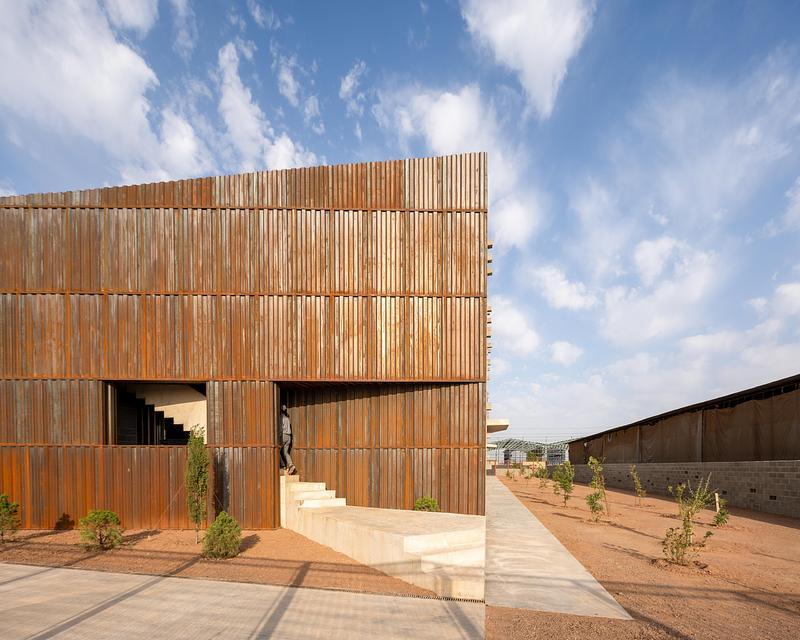
Industrial architecture is often measured by efficiency, productivity, and technical performance. Yet the Process Department of Shamim Polymer Factory in Eshtehard, Iran, designed by Davood Boroojeni Office, explores a different question: what happens after construction is complete? Rather than treating a factory as a finished object, the project recognizes that buildings continue to evolve through the routines, habits, and unexpected behaviors of the people who use them every day. This perspective became the foundation of a workplace that grows from observation rather than assumptions. Davood Boroojeni Office developed the project as an extension of lessons learned from an earlier building on the same industrial campus.
Learning from Occupation Rather Than Theory
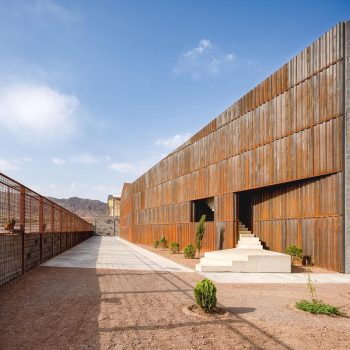
Three years after completing a previous facility for Shamim Polymer Factory, the architects returned expecting to evaluate a completed project. Instead, they discovered a workplace transformed by daily activity. Workers had created informal routes, gathering areas, and practical adaptations that were never part of the original drawings. These observations revealed how human behavior continually reshapes architecture long after construction crews leave the site.
Rather than correcting these changes, the design team viewed them as valuable information. The Process Department emerged from a process of listening to the building itself. This approach shifted the project away from purely technical planning and toward a more responsive form of workplace design that acknowledges how people actually inhabit industrial environments.
Making Space for Everyday Rituals
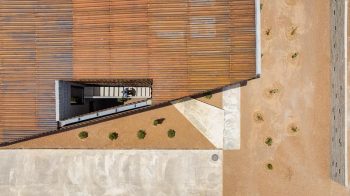
One of the most distinctive aspects of the project is its attention to activities typically ignored in industrial architecture. The architects noticed that workers consistently gathered in informal smoking areas around the site. Instead of hiding or eliminating this reality, the project incorporates a transparent smoking room directly into the building composition.
This space remains visually connected to production areas while maintaining environmental separation. The intervention is intentionally modest, yet it demonstrates how architecture can acknowledge existing workplace culture. By integrating rather than suppressing these routines, the building creates a more honest relationship between factory operations and everyday life.
Architecture Beyond Production
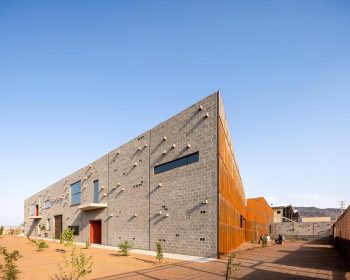
Repeated site visits also revealed another unexpected aspect of factory life. Workers were caring for domestic birds within the industrial grounds. Rather than seeing this activity as incompatible with a modern manufacturing environment, the architects incorporated a small enclosure into the new facility.
This decision reflects a broader understanding of the workplace as a social ecosystem. Factories depend not only on machinery and logistics but also on relationships, maintenance practices, conversations, and moments of pause. The project acknowledges these often-overlooked dimensions of labor, creating a richer and more humane interpretation of industrial space.
A Building Designed to Evolve
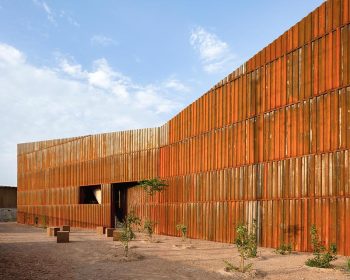
The material strategy reinforces this philosophy. Finishes and construction systems were selected with the expectation that they would weather, adapt, and record traces of occupation over time. Instead of resisting change, the building embraces it as an essential part of its identity.
The project’s title refers to the gap between architectural intention and lived reality. Rather than viewing this distance as a problem, the design treats it as an opportunity for learning. In doing so, the Process Department challenges conventional ideas of completion and proposes a model where observation becomes as important as design itself.
Through this thoughtful approach, Davood Boroojeni Office demonstrates that industrial architecture can be more than a container for production. The project suggests that the most meaningful aspect of a building may be the ways people quietly transform it over time. By embracing adaptation, participation, and lived experience, Davood Boroojeni Office presents an industrial facility that continues to learn long after the drawing ends.
| Technical Sheet | |
|---|---|
| Project Name | Process Department of Shamim Polymer Factory |
| Location | Eshtehard, Iran |
| Architecture Firm | Davood Boroojeni Office |
| Lead Architect | Davood Boroojeni |
| Design Team | Davood Boroojeni, Iman Enayati, Paola Quarta, Ronak Roshan Gilvae, Alireza Elmieh, Amirmohamad Amel, Hadi Koohi Habibi |
| Construction | Mohsen Nikzad, Erfan Nikzad, Iman Iadolahi |
| Structure Engineer | Bardia Khafaf |
| Electrical | Amir Hasan Salamat |
| Mechanical | Hamid Reza Nikzad, Abolfazl Jafari |
| Supervision | Davood Boroojeni Office |
| Photography | Deed Studio |
| Site Area | 3,850 m² |
| Total Built Area | 2,200 m² |
| Program | Industrial Facility / Process Department |