Terry Aidoo introduces the Kabila Collection, a furniture series that turns the social rhythm of the traditional African courtyard into contemporary wooden objects. Comprising a coffee table and stool, the collection explores how furniture design can support gathering, conversation, and cultural continuity without relying on loud ornament or predictable nostalgia.
The word Kabila means clan or tribe in both Swahili and Arabic, giving the collection a name rooted in shared identity. Rather than treating furniture as isolated objects, Kabila frames each piece as part of a wider social setting, where community and memory shape how people sit, meet, and spend time together.
A Courtyard Reimagined as Furniture

Across many African cultures, the courtyard is more than open space. It is where meals are shared, stories are passed down, celebrations unfold, and everyday encounters become part of family and communal life. Kabila translates this architectural idea into a compact domestic landscape, proving that interior objects can still carry the weight of place, ritual, and belonging.
The coffee table acts as the symbolic center of the arrangement, while the stools surround it like individual seats around a communal courtyard. This relationship gives the collection an inviting spatial quality, encouraging people to gather around the table instead of treating it as another polished object to admire from a safe, emotionally unavailable distance.
Cultural References in the Details
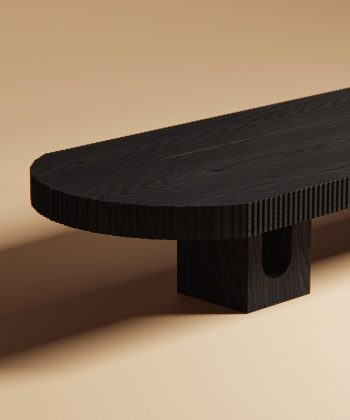
At the center of the Kabila coffee table is a recessed circular detail inspired by the Eritrean coffee ceremony, a ritual associated with hospitality, dialogue, and togetherness. This gesture turns the table surface into a meaningful field for shared rituals, where design becomes less about decoration and more about how people interact.
The table also incorporates a carved interpretation of Oware, one of West Africa’s oldest and most widely played board games. Traditionally played across generations, Oware carries associations with strategy, learning, storytelling, and social exchange. In Kabila, the reference adds a playful yet reflective dimension to the furniture, connecting craft with collective memory.
Stool Forms with Historical Resonance
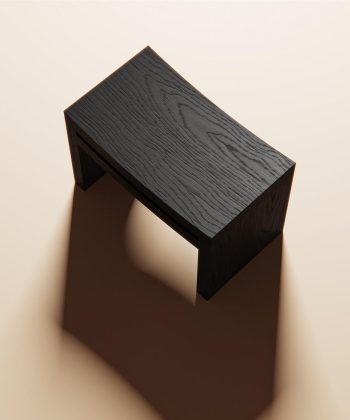
The accompanying stool draws inspiration from traditional seating forms of the Benin Kingdom in present-day Nigeria. Historically, Edo stools carried both practical and symbolic significance, often linked to identity, status, and cultural presence. Kabila does not replicate these references literally, which is helpful, because design history does not need another costume party with legs.
Instead, the stool reinterprets those cultural cues through a contemporary language of proportion, volume, and material expression. Its role is both functional and relational: it completes the furniture setting while reinforcing the idea that seating can shape how people gather, face one another, and occupy a social space.
Material, Craft, and Contemporary Expression
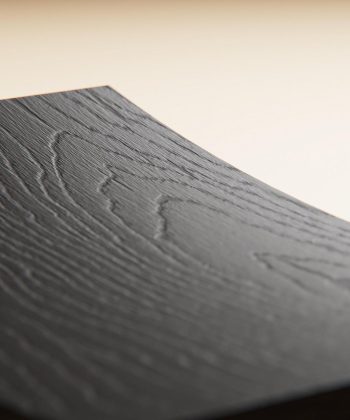
Kabila is handcrafted from solid sapele wood, selected for its durability, warm tone, and expressive grain. The collection combines traditional woodworking with contemporary fabrication, resulting in objects that feel precise without losing the character of the hand. The use of sapele wood also supports the collection’s emphasis on warmth, tactility, and longevity.
The collection received recognition at the AIDA Awards 2026, where Terry Aidoo was named Product Designer of the Year. While the release does not state pricing or availability details, Kabila positions Terry Aidoo as a designer using furniture to hold culture, ritual, and community in forms that feel contemporary rather than merely referential.
| Item | Description | Cultural Reference | Material | Designer / Contributors |
|---|---|---|---|---|
| Coffee Table | Central sculptural table conceived as a contemporary interpretation of the communal courtyard center. | Eritrean coffee ceremony and Oware board game traditions from West Africa. | Solid sapele wood | Terry Aidoo; Festival Divercity |
| Stool | Accompanying seating element designed to surround the table and encourage gathering and exchange. | Traditional seating forms from the Benin Kingdom and Edo stool culture. | Solid sapele wood | Terry Aidoo; Festival Divercity |
| Collection | A furniture family exploring community, belonging, ritual, and shared experience through contemporary craft. | African courtyard culture as a framework for social life and cultural continuity. | Handcrafted sapele wood with contemporary fabrication processes | Photography by Matteo Ercole |
| Award | AIDA Awards 2026: Product Designer of the Year | Recognition for product design and cultural storytelling. | – | Terry Aidoo |