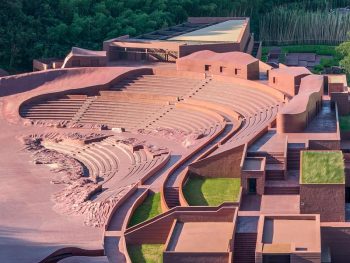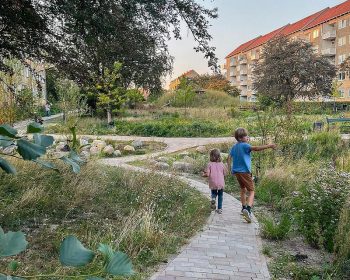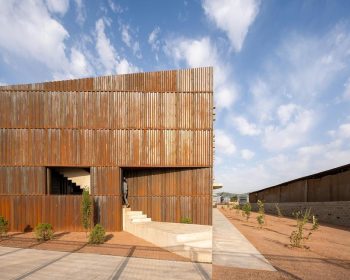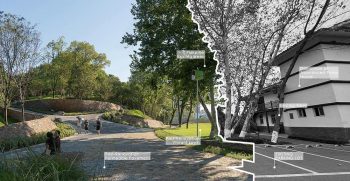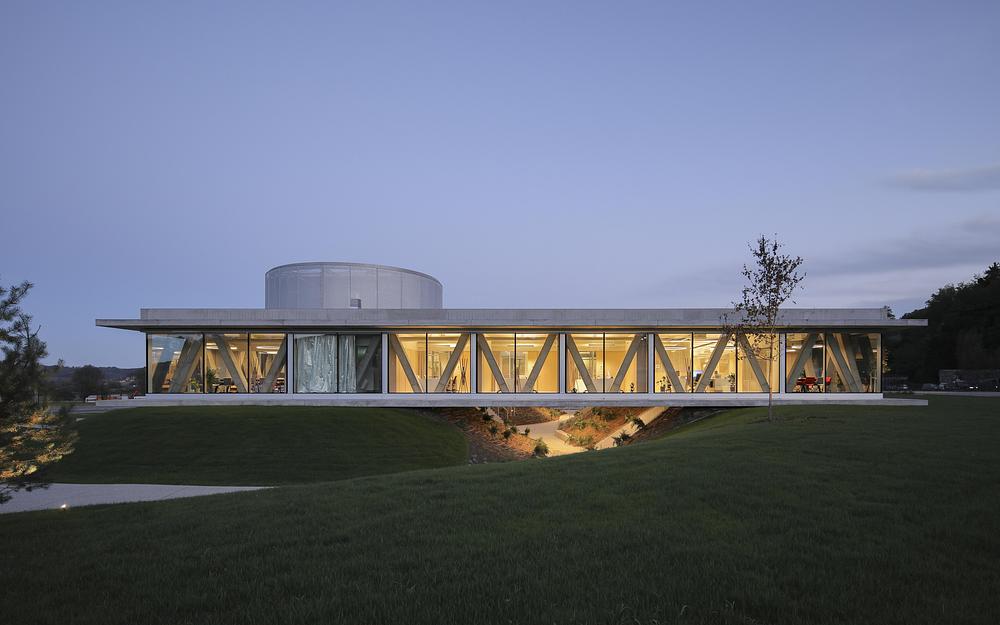
In Barranquilla, Colombia, DEB Architecture and El Equipo Mazzanti have shaped the Cienaga de Mallorquin Ecopark as a careful negotiation between urban life and a fragile coastal ecosystem. Rather than treating the wetland as scenery, the project frames it as living infrastructure, where public access, ecological restoration, and civic learning can coexist without turning nature into yet another over-designed human playground.
Located where the Atlantic Ocean meets the Magdalena River, the ecopark works with one of the most important lagoon systems in the Colombian Caribbean. Its mangroves, bird habitats, and hydrological cycles had been weakened by decades of territorial change, including urbanization and the transformation of the Bocas de Ceniza area. The response is not a heroic object, but a landscape framework that makes the wetland visible, legible, and protected.
A Living Edge for a Vulnerable Ecosystem
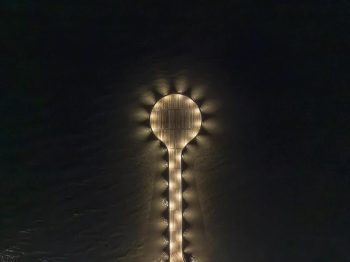
The idea of a “living edge” is central to the project. Instead of drawing a hard boundary between the city and the Cienaga de Mallorquin, the ecopark creates an active transition zone where visitors can move through the landscape while remaining physically separated from its most sensitive areas. This approach reduces direct pressure on the ground and helps preserve the wetland ecology that supports resident and migratory species.
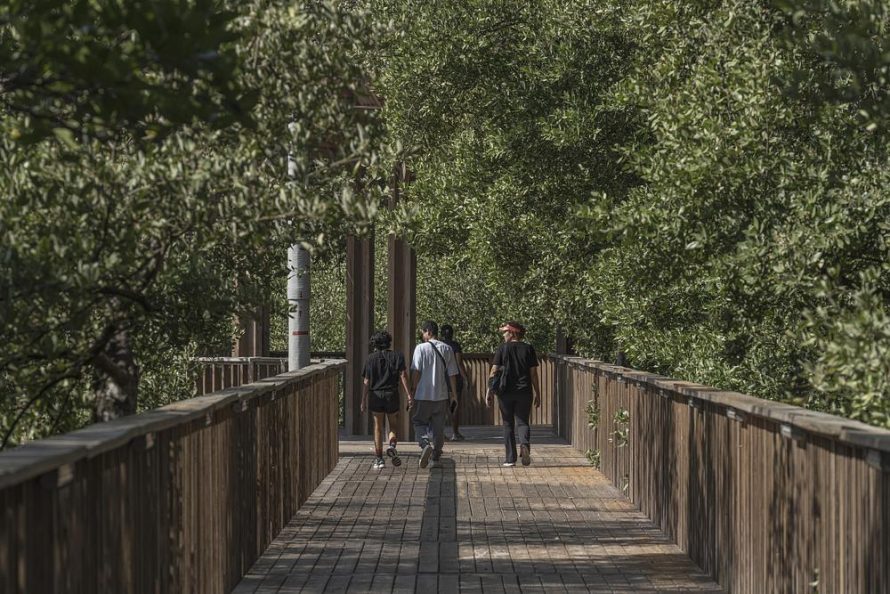
Covering 61,834 m2, the intervention uses elevated walkways, platforms, resting points, and gathering areas to guide movement lightly across the site. The architectural language is deliberately restrained. It allows the mangrove, water, sky, and birds to remain the main experience, which is refreshing in a world that often insists every public space needs to shout for attention like a shopping mall with better shrubs.
Public Space as Environmental Education
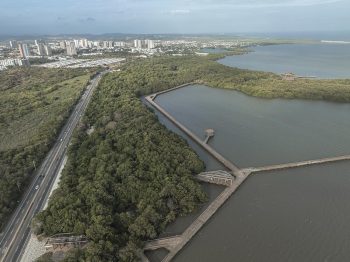
The elevated paths open access to areas that were previously difficult to experience, turning the wetland into an outdoor classroom. Observation platforms become places for birdwatching, interpretation, and quiet learning, supporting scientific, educational, and recreational activities. Here, environmental awareness is not delivered through slogans, but through direct contact with the rhythms of the landscape.
The first phase is organized around two main districts: the Contemplation District and the Family District. The Contemplation District focuses on biodiversity observation and learning, while the Family District introduces spaces for recreation and social gathering. Together, they create a public realm where ecological respect and everyday urban life are not treated as opposing forces.
Community Practices Within the Landscape
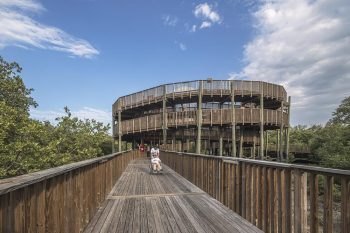
One of the strongest aspects of the Cienaga de Mallorquin Ecopark is its recognition of existing local practices, especially artisanal fishing. Rather than erasing these activities in the name of conservation, the project incorporates them into the spatial and cultural logic of the park. This gives the intervention a deeper community identity, rooted in the people who have long depended on and understood the wetland.
This balance between public use and ecological protection gives the project its broader urban relevance. It does not simply beautify a damaged edge of the city. It proposes a civic model in which regeneration includes access, memory, livelihood, and education. In that sense, the ecopark becomes both a recreational destination and a tool for long-term territorial care.
A Replicable Model for Coastal Regeneration
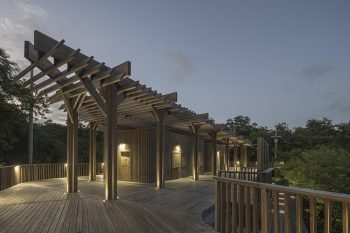
The project’s international recognition confirms its importance beyond Barranquilla. Awards including the 2025 AIA International Honor Award for Urban Design, the 2025 AIA International Sustainable Future Award for Urban Design, the 2025 Dedalo Minosse OCCAM Under 40 Award, and the Architizer A+ Awards 2026 Winner point to its contribution to sustainable urban design.
By placing landscape, ecology, and public space within the same design strategy, DEB Architecture and El Equipo Mazzanti show how vulnerable coastal territories can be repaired without being overbuilt. The Cienaga de Mallorquin Ecopark is not a finished monument, but an evolving system, one that suggests cities might still learn to live with nature instead of constantly trying to improve it into exhaustion.
Technical Sheet
| Item | Details |
|---|---|
| Project Name | Cienaga de Mallorquin Ecopark |
| Location | Barranquilla, Colombia |
| Area | 61,834 m2 |
| Year | 2022 |
| Design | DEB Architecture and El Equipo Mazzanti |
| Project Director | Francisco Ricardo Marino |
| Client | Puerta de Oro Barranquilla |
| President and Project Structurer | Ricardo Vives |
| Team | Luis Guillermo Barrera, Jorge Robledo Manco, Natalia Gamez, Jose Daniel Rosado, Juan Sebastian Perez |
| Topography and Bathymetry | SINTH Ingenieria |
| Structural Engineering | Estructuras Sostenibles |
| HVAC Design | Ing. Jose Solano Perez Design and HVAC Consulting |
| Electrical Design | RPB |
| Telecommunications Design | AP Ingenieria |
| Hydrosanitary Design | SINTH Ingenieria |
| Traffic Study | M Ingenieria y Planeacion |
| Environmental Impact Assessment | PIMAS |
| Life Safety | AGR |
| Road Geometry | M Ingenieria y Planeacion |
| Cost Estimation | MB Ingenieria Vial |
| Bioclimatic Study | Oleb Arquitectura Bioclimatica & Sostenibilidad |
| Awards | 2025 AIA International Honor Award for Urban Design, 2025 AIA International Sustainable Future Award for Urban Design, 2025 Dedalo Minosse OCCAM Under 40 Award, Architizer A+ Awards 2026 Winner |