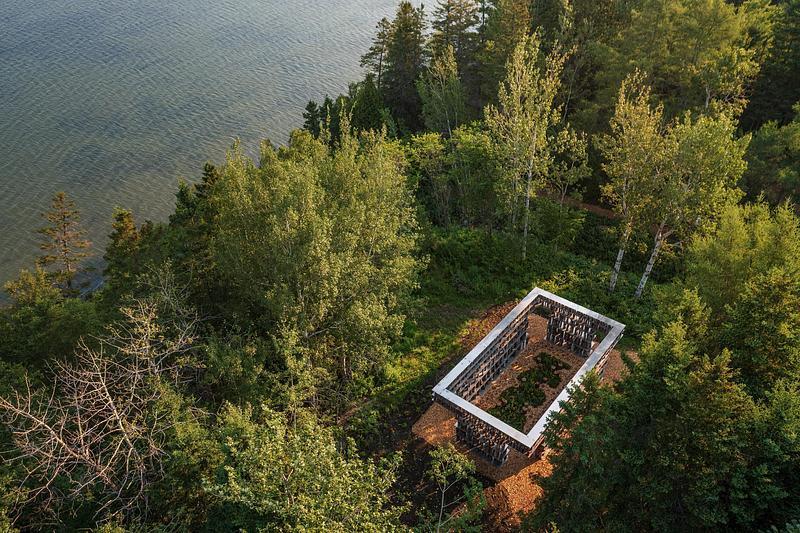
The International Garden Festival returns to Grand-Metis, Quebec, for its 27th edition with five new installations selected from 204 proposals submitted by designers across 29 countries. Developed around the theme Mapping Sensitivity, the 2026 edition considers landscape not simply as territory to be measured, but as a space experienced through memory, perception, movement, climate, sound, and physical presence. The gardens can be visited until October 4, 2026, alongside nearly 30 contemporary installations presented across the festival site. More about the event is available through the International Garden Festival.
Mapping Landscape Through Personal Experience
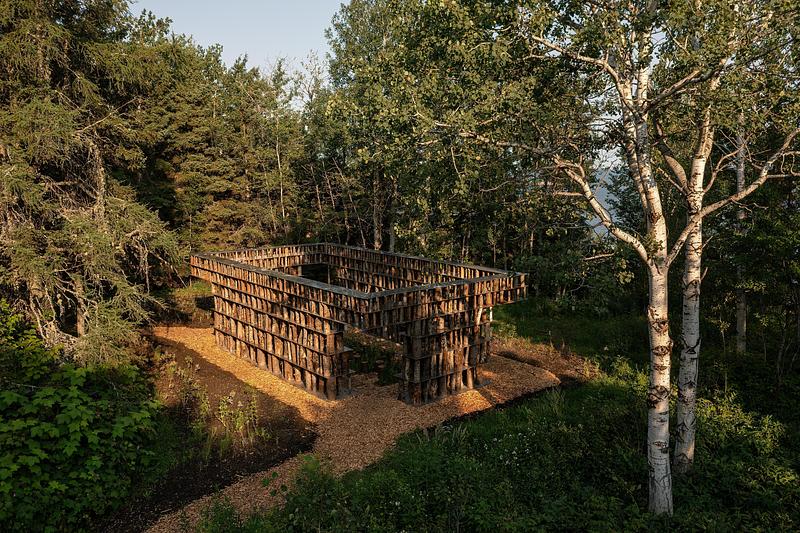
Curated by Artistic Director Eve De Garie-Lamanque, Mapping Sensitivity extends the festival’s ongoing investigation into the poetics of space. Instead of approaching mapping as a neutral representation of geography, the theme considers how subjective experience can shape our understanding of a place. Cultural associations, bodily movement, changing light, scent, material texture, and environmental conditions all become part of an expanded form of landscape mapping.
The result is an exhibition that resists the idea of a garden as a fixed composition. Plants develop, timber weathers, surfaces react to moisture, and shadows move throughout the season. This gradual transformation makes time itself one of the design materials, allowing visitors returning later in the summer to encounter installations that may feel noticeably different from their first visit.
Five Winning Gardens Explore Different Scales
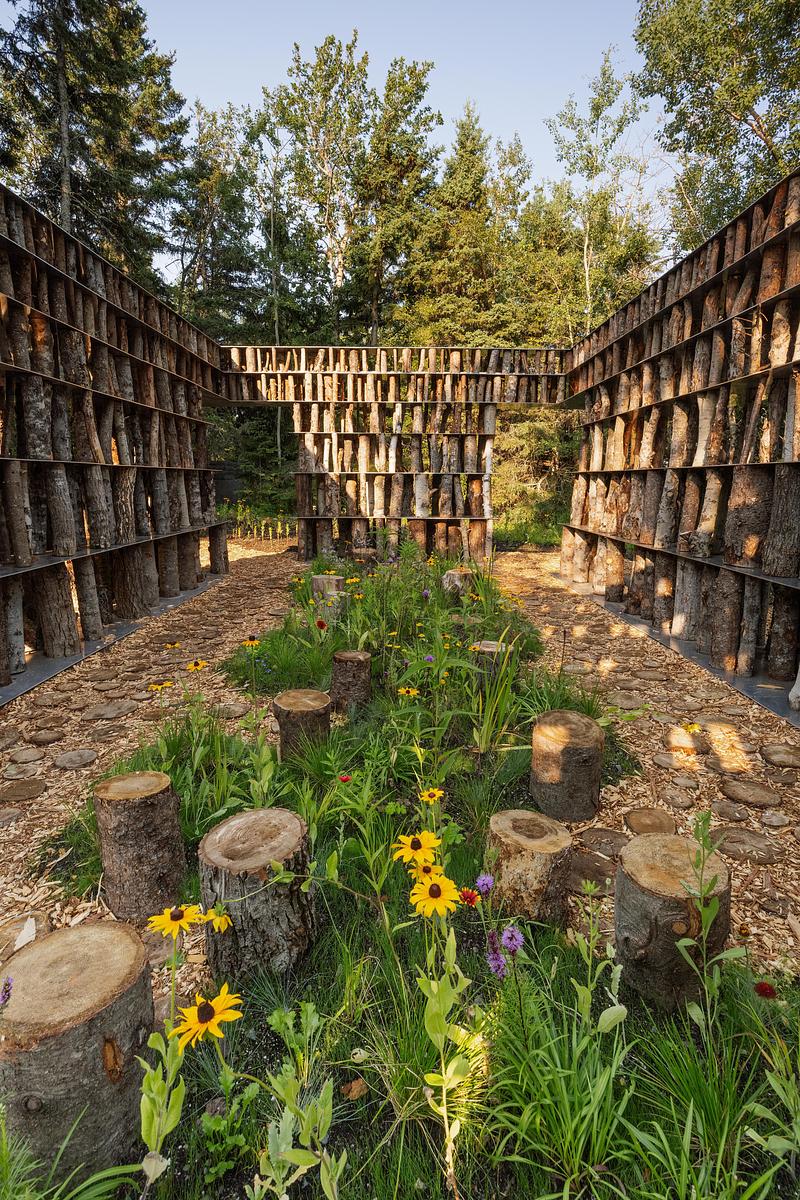
Hugh Taylor’s Again, a Garden uses fallen logs held between aluminium plates to form a contained garden populated by native pollinator species. Rather than separating architecture from ecological processes, the installation frames decay, regeneration, and habitation as parts of the same system. Its enclosure offers a place for rest while drawing attention toward cycles that usually remain unnoticed.
German architect Ulli Heckmann takes a more explicitly spatial approach with Frame. The sculptural installation filters views and establishes varying degrees of enclosure, encouraging visitors to reconsider how their own position determines what can be seen. Architecture becomes less about constructing an object and more about directing perception, revealing how partial every reading of a landscape inevitably is.
Scent, Digital Space, and Alternative Viewpoints
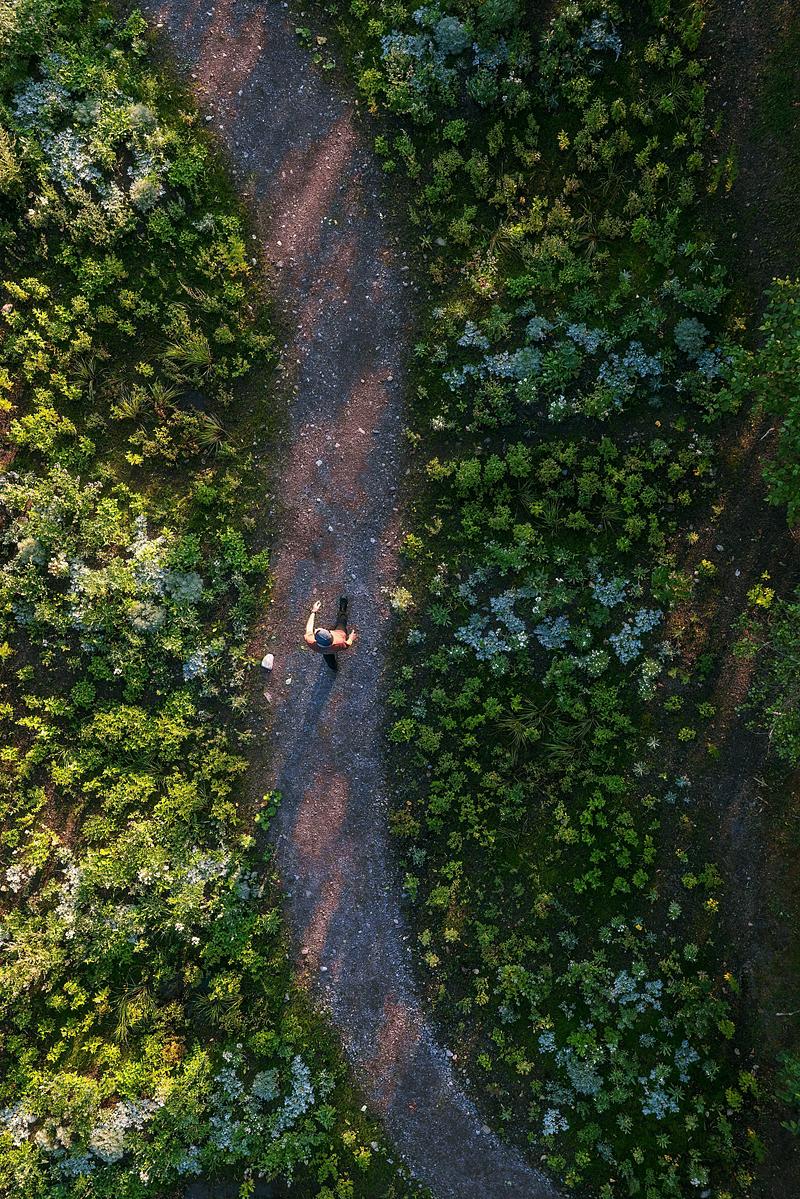
French landscape designer Etienne Lapleau compresses different ecological conditions within Mentho-artemision. Mint and mugwort occupy contrasting environments, creating transitions between dry and humid conditions that can be registered through sight, scent, and touch. The garden effectively turns ecological variation into an immersive sensory section through the landscape.
Tainai-Meguri, developed by Clinton Cuddington of Measured Architecture with Tamotsu Tongu and Kumpei Wakino, translates an increasingly abstract subject into physical space. Its sweeping arbour imagines digital space as a cave-like environment where nature, water, and light gradually replace the screen as the visitor’s primary field of perception. The installation blends architectural structure with Japanese-informed landscape sensibilities adapted to Canada’s West Coast context.
Ellen Harris reverses conventional cartographic thinking with Worm’s Eye. Rather than understanding territory from an authoritative view above, the project promotes a close, fragmented, and deliberately incomplete reading from within. Its idea of camouflage architecture questions systems that attempt to make landscapes completely legible and instead values intimate knowledge developed through direct occupation.
A Festival Designed to Change With Time
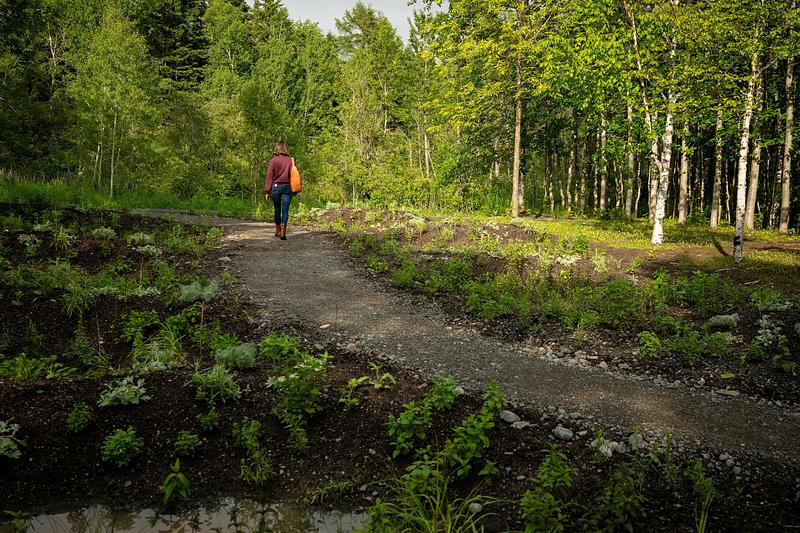
The 2026 program also includes Tom Jacques’ special project Pousses de son, an experimental garden that shifts attention from visual composition toward listening. Sound and vibration become spatial materials, encouraging visitors to experience the surrounding landscape acoustically rather than relying almost entirely on sight. Together, the installations demonstrate how contemporary landscape design can operate through senses that conventional plans and photographs struggle to represent.
With nearly 30 gardens currently occupying the site, the 27th International Garden Festival presents landscape as something unfinished, relational, and constantly changing. The five winning installations move between ecology, architecture, digital culture, scent, perception, and sound, yet share an interest in how people physically experience place. Rather than producing definitive maps, they suggest that landscapes may be better understood through repeated encounters, a particularly fitting proposition for gardens that continue growing and transforming throughout the summer.
| Project | Designer | Location | Design Focus |
|---|---|---|---|
| Again, a Garden | Hugh Taylor | Manitoba, Canada + United States | Native pollinators, material decay, ecological cycles |
| Frame | Ulli Heckmann | Germany + Netherlands | Spatial perception, framed views, body awareness |
| Mentho-artemision | Etienne Lapleau | France | Scent, planting, dry-to-humid landscape transitions |
| Tainai-Meguri | Measured Architecture + Tamotsu Tongu + Kumpei Wakino | British Columbia, Canada | Digital space, nature, water, light, meditation |
| Worm’s Eye | Ellen Harris | United States | Camouflage architecture, local perception, alternative mapping |