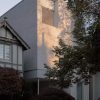
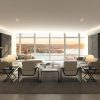
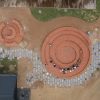
Haeahn Architecture, in collaboration with H Architecture, redefines civic transparency through the National Assembly Communication Building in Seoul, South Korea. Positioned within the historic parliamentary complex, the project responds to the symbolic weight of Korean democracy while proposing a more open and accessible civic architecture. Recognized with the 2023 Architizer A+Awards Popular Choice prize in the Government & Civic Buildings category, the building demonstrates how institutional architecture can evolve beyond monumentality into a platform for dialogue. Designed by Taeman Kim and Jaejun Ryu, the project establishes a new spatial language for governance within a contemporary urban context.
Large Eaves as Civic Gesture

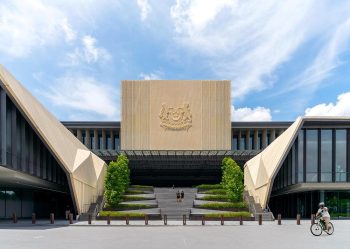
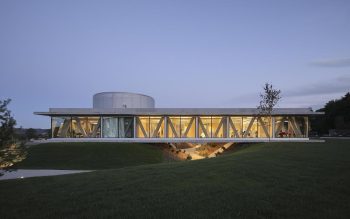
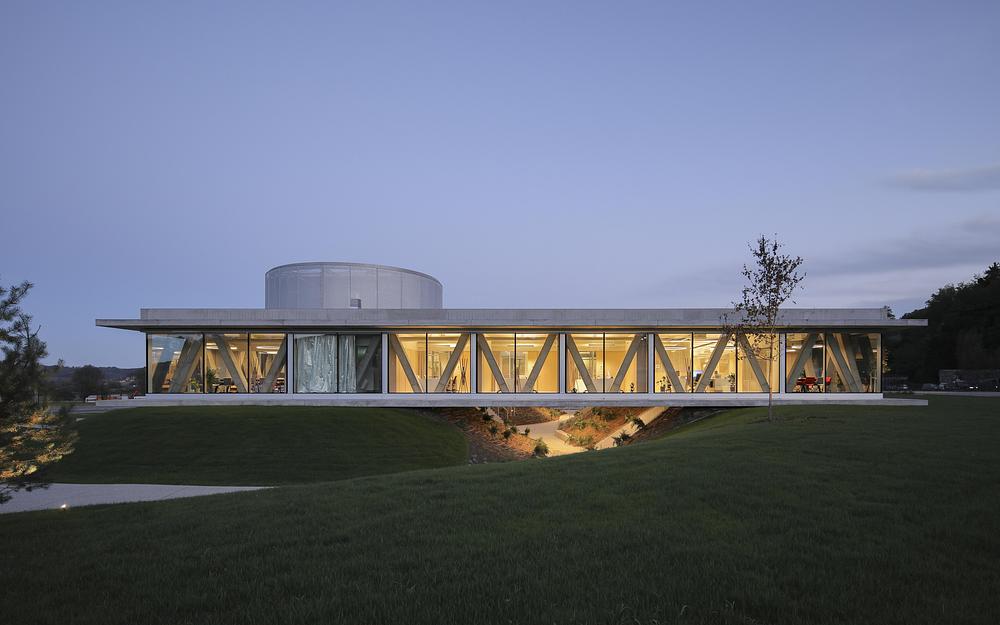
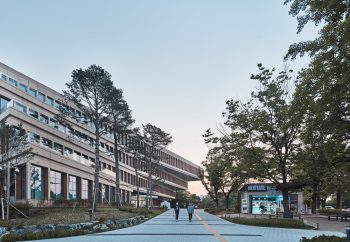
The defining architectural move lies in its expansive horizontal eaves. These overhangs temper sunlight, frame views, and visually lower the structure within its lush surroundings. Rather than asserting dominance, the building maintains a four-story height to preserve the established skyline of the National Assembly complex. The result is a human-scale civic structure that quietly integrates into the tree canopy.
The roofscape continues this narrative. Designed as an accessible green roof, it connects visually and environmentally with the surrounding woodland. Mature Zelkova trees, some dating back to the early development of the complex, were carefully preserved, reinforcing continuity between past and present. The architecture becomes embedded within landscape rather than imposed upon it.
Flexible Planning for Democratic Exchange
Programmatically, the National Assembly Communication Building accommodates diverse user groups including the public, press, administrative staff, and parliamentary representatives. This required a balance between high-level security and spatial openness. The architects implemented a horizontal zoning strategy that distributes functions floor by floor while maintaining independence between facilities.
Four circulation cores arranged around a central atrium organize movement according to user categories. This layered approach ensures operational clarity while preserving a sense of openness. An optimized structural modular system further enhances adaptability, allowing workspaces and functional areas to evolve with changing demands. The building thus becomes a flexible workspace embedded within a secure civic framework.
Green Space as Public Interface

The site, originally a green belt, inspired a design that amplifies the existing natural character. Instead of clearing the landscape, the project weaves built form between trees. The outdoor areas function as transitional civic spaces, softening the boundary between institution and city. Through subtle landscaping interventions, the building reinforces its identity as a public green space.
Common terraces, shaded walkways, and open plazas create opportunities for informal gathering. These exterior environments extend the building’s communicative role beyond enclosed interiors, making the landscape itself a platform for civic interaction. In doing so, the monumental aura of the National Assembly grounds remains intact, yet newly approachable.
Architecture of Encounter and Dialogue

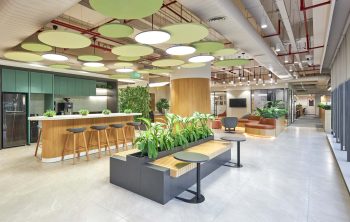
The conceptual theme “Encounter and Communicate” shapes the interior spatial experience. Shared lounges, rest areas, and interstitial spaces between formal functions encourage spontaneous meetings. These carefully positioned voids and crevices operate as social condensers, fostering collaboration across institutional boundaries.
By connecting indoor and outdoor zones through visual permeability and layered circulation, the building promotes interaction not only between people but also between architecture and nature. Through this strategy, Haeahn Architecture and H Architecture articulate a vision of civic design that aligns institutional dignity with democratic openness.
| Project Name | National Assembly Communication Building |
| Location | Seoul, South Korea – Google Maps |
| Program | Public Office, Community Facilities, Briefing Room, Broadcast Facility, Welfare Facility, Restaurant, Retail, Landscape Gardens |
| Gross Area | 23,754 m² |
| Completion Year | 2020 |
| Client | The National Assembly of the Republic of Korea, National Assembly Secretariat |
| Architects | Taeman Kim, Jaejun Ryu |
| Photographer | Namsun Lee |