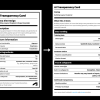
Autodesk has expanded its AI Transparency Cards and brought their information into Autodesk Assistant. The September 15 announcement focuses on a practical problem for architecture teams: understanding an AI feature while deciding whether to use it on a project. This is a documentation and access update, not evidence that every AI output has become more accurate.

Ask about the feature, not AI in general
The cards describe what a feature does, its underlying models and how it was trained. The updated format adds dedicated information on data handling, customer choice, safeguards and model providers. Treating those subjects separately makes a project review more specific than asking whether a whole software platform is trustworthy.
Autodesk illustrates the change with cards for Forma Building Layout Explorer. The diagram is a feature-specific example, not a promise that all products use identical training data or offer the same controls. A studio should look for the card attached to the actual capability being evaluated, rather than transfer an answer from a familiar tool.
Keep the source beside the answer
Customers can ask Assistant in natural language about a feature's purpose, processed data, limitations, safeguards, oversight and underlying model. Autodesk says answers identify the source card and let the user open it. The useful step is therefore reading that source after receiving the conversational summary, especially when a client's information is involved.
This fits the distinction between approval and context in connected AEC workflows. Easier access to information can support a decision, but it does not make the decision for the project team. Keeping a human review step preserves the difference between a documented software capability and permission to use it in a particular commission.
Data questions need a precise scope
Autodesk says training practices depend on the feature. For certain capabilities, datasets include aggregated, de-identified elements of customer content. That qualification matters: feature-dependent training should not become a blanket assertion that customer content is never used. Equally, it should not be extended into an unsupported claim that every uploaded project trains a model.
The company says it does not share customer data with third parties for their own model training. Those are vendor statements, not an independent audit conducted for this article. For a live project, the appropriate next check is the applicable feature documentation and contractual requirements, particularly where client confidentiality affects the proposed workflow.
Transparency leaves room for unanswered questions
If a card does not cover a question, Assistant says so, according to the announcement. That is a useful boundary for documentation-led review. Missing information should remain unresolved until it is clarified; a fluent response alone is not a reason to assume suitability, regulatory compliance or a guarantee about how an individual project will be handled.
The expanded cards and Assistant integration were described as available when Autodesk announced them. The release does not provide new pricing or a product-by-product entitlement list. Its value for architecture practice is closer access to evidence, while the final choice of feature and project use remains a responsibility for the team.