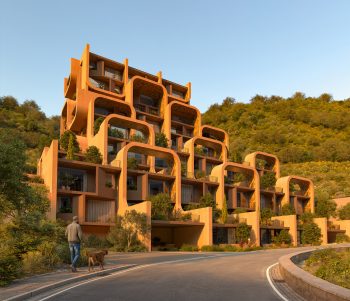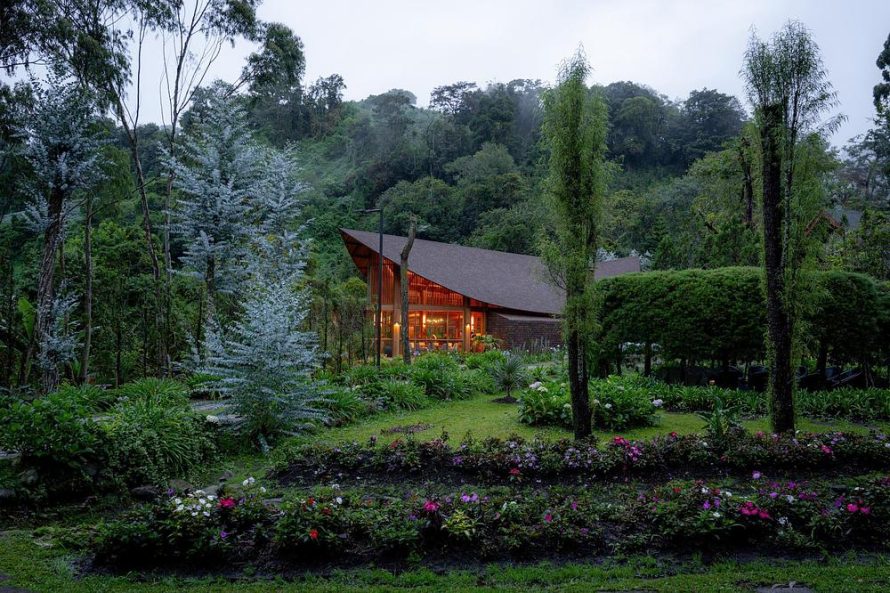
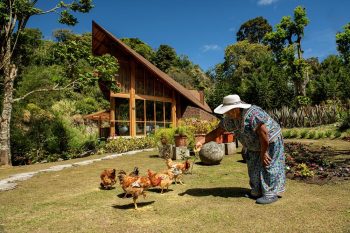
Mallol has completed El Arca, a private timber pavilion in Nueva Suiza, Chiriqui, Panama, set more than 2,000 meters above sea level on the slopes of Volcan Baru. Surrounded by coffee plantations, mist, river sounds, and the cloud forest, the residence is not designed as an object placed on the land, but as a quiet structure shaped by what the land already offered.
A Curved Roof Inspired by a Fallen Leaf
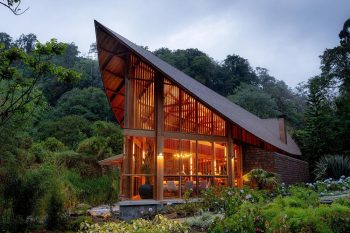
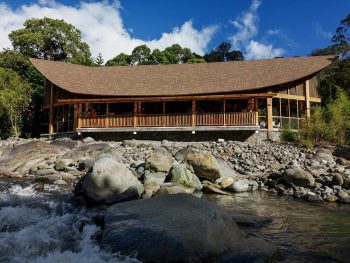
The project is organized beneath one broad curved roof that shelters the entire domestic program. Its arcing profile recalls the shape of a dry leaf resting on the ground, a simple natural reference that gives El Arca both its name and its architectural identity. Under this roof, living, dining, and resting areas are arranged in a single-level plan, allowing the house to remain open toward the gardens, the river, and the surrounding forest.
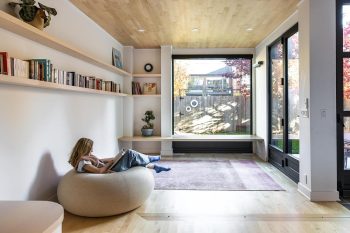
Rather than separating structure from atmosphere, the pavilion makes its timber frame visible throughout the interior. The exposed ceiling becomes both shelter and expression, giving the rooms a warm, crafted presence without unnecessary decoration. This makes the residence feel grounded and tactile, a place where architecture is read through material, shadow, and the rhythm of handmade construction.
Site-Sourced Cedar and Handcrafted Construction
One of the most compelling aspects of El Arca is its commitment to site-sourced cedar. The primary structural frame, wall cladding, flooring, and exposed ceiling were made from timber native to the property itself. This approach reduces dependency on external supply chains while allowing the building to carry the physical character of its territory.
The construction was developed in close collaboration with local craftsmen Amilcar Rodriguez and Abdiel Rodriguez, whose knowledge of cedar shaped the project from framing to finish. Their handcrafted joinery gives the pavilion a sense of precision that feels human rather than industrial. Stone extracted from the region was also used for pathways, terraces, and ground surfaces, extending the same material logic into the landscape.
Building Around the Boulder, Not Over It
During the design process, a large boulder discovered on the site became a central element rather than an obstacle. Instead of removing it, the house was planned around the rock, which now sits within an interior garden enclosed by cedar and full-height glass. Surrounded by endemic plants and lit from below, it anchors the pavilion with a direct reminder of the ground beneath it.
This decision reveals the broader attitude of the project: El Arca does not attempt to erase or dominate its location. The preserved stone becomes a quiet architectural event, turning existing geology into part of daily domestic life. From the riverside, the boulder remains visible through the glazing, connecting the private interior back to the larger landscape.
A Landscape That Extends the Architecture
The gardens around the pavilion combine endemic species with intentional planting, creating a layered cultivated landscape before the house is even reached. This arrival sequence softens the transition between forest, garden, and residence, allowing the building to emerge gradually rather than announce itself with needless drama, because apparently subtlety still exists somewhere.
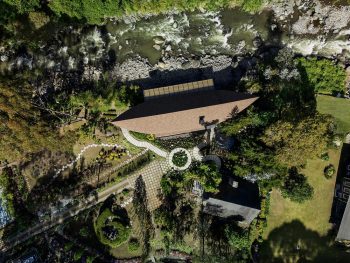
A mountain river runs along the edge of the property without being redirected or enclosed. Its sound is present throughout the interior, acting as a natural acoustic layer that connects the house to its environment. In a region defined by mist, rain, and changing temperatures, this continuous relationship with water becomes part of the pavilion’s daily experience.
Regional Craft as a Sustainable Model
El Arca shows how a private residence can become a model of local construction without turning sustainability into a slogan. By sourcing cedar from the property, using regional stone, and employing craftsmen from the Chiriqui highlands, the project keeps material, labor, and technical knowledge within the same territory.
Completed in 2024 and photographed by Alfredo Maiquez and Pepe Calavera, the pavilion presents a refined but grounded vision of residential architecture in Panama’s highlands. For Mallol, El Arca is more than a sustainable residence; it is an example of architecture shaped by climate, craft, and the patience to listen to a landscape before building on it.
Technical Sheet
| Item | Details |
|---|---|
| Official Project Name | El Arca |
| Location | Nueva Suiza, Chiriqui, Panama |
| Google Maps | Nueva Suiza, Chiriqui, Panama |
| Client | Private |
| Architects | Mallol |
| Design Team | Mallol |
| Project Completion | 2024 |
| Construction Area | 220 sqm |
| Carpentry and Construction Execution | Amilcar Rodriguez and Abdiel Rodriguez |
| Main Material | Site-sourced cedar and local stone |
| Photographers | Alfredo Maiquez and Pepe Calavera |