Dastan Mansion rethinks domestic restoration in Tehran by turning a neglected century-old residence into a home shaped by memory, material, and daily life. Designed by Saye Architects, the project does not treat heritage as a frozen artifact. Instead, it frames the house as a living structure that can continue to evolve while retaining the emotional and architectural traces of its past.
Set within Tehran’s dense historic fabric, the house works with an unusually compact footprint, with each floor measuring only around fifty square meters. That constraint could have pushed the design toward pure efficiency. Yet the renovation gradually revealed a deeper opportunity: the building itself contained a powerful identity. Original brick surfaces, hidden structural features, and sculptural stairs began to emerge from beneath years of alteration, redirecting the project toward a more careful conversation between preservation and adaptation.
Rediscovering the House Beneath the Renovation

The early phase of the project focused on how to fit contemporary family needs into a tight urban house. But as layers were removed, the design team uncovered original elements that fundamentally changed the project’s direction. Brick textures, vaulted spaces, and older wooden components were not treated as remnants to be concealed. They became the architectural anchors of the new design, giving the home a renewed sense of authorship and continuity.
This shift is what makes Dastan Mansion more than a polished renovation. It became a process of reading the building carefully, almost like decoding a document written over many decades. The result is a residence where the old structure is not cleaned into neutrality, but allowed to remain visible as part of the house’s present-day atmosphere. That decision gives the interior a sense of depth that many new homes struggle to achieve.
Small Spaces, Layered Experiences
Working within fifty square meters per floor required a disciplined spatial strategy. Every intervention had to support usability without overwhelming the original architectural character. Rather than forcing oversized gestures into a compact frame, the design relies on clarity, proportion, and continuity between rooms. This creates a home that feels intimate without becoming cramped, and expressive without losing functionality.
The staircase plays a central role in this experience. Alongside the preserved brickwork, it helps organize movement and visual rhythm throughout the house. These elements do more than connect levels or define surfaces. They shape how the residents encounter the building day by day, reinforcing a strong relationship between space and memory in a way that feels both practical and poetic.
Interiors Rooted in Iranian Identity

Inside the house, contemporary living is balanced with a strong attachment to cultural continuity. The client furnished the interiors with Iranian antiques collected over time, allowing each piece to participate in the narrative of the home. This was not a decorative afterthought, but a meaningful extension of the architecture itself. Furniture, objects, and surfaces work together to create an interior language grounded in place.
That approach avoids the common trap of restoration projects that preserve walls while filling them with generic modern interiors. Here, the atmosphere remains specific to Tehran and to the client’s personal history. The home feels assembled through care rather than styled for effect, which gives the project an unusual sense of authenticity. It shows how heritage can be sustained not only by repairing structures, but also by preserving ways of inhabiting them.
An Urban Reminder of Tehran’s Vanishing Fabric

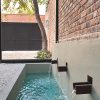
Dastan Mansion also speaks to a wider urban condition. Much of Tehran’s historic residential fabric has been erased by rapid redevelopment, making surviving houses increasingly valuable as carriers of cultural memory. The project’s courtyard, along with the discovered water basins and reservoirs preserved beneath glass, recalls an older mode of urban life in which outdoor rooms and domestic green space were part of everyday living.
In that sense, the project contributes something larger than a private home. It suggests that restoration can be a civic act, especially in cities where architectural continuity is under pressure. By uncovering buried layers and making them legible again, the house becomes both shelter and record. Through Dastan Mansion, Saye Architects demonstrate how a historic Tehran residence can support contemporary life without surrendering the character that made it worth saving in the first place.
| Technical Sheet | |
|---|---|
| Project Name | Dastan Mansion |
| Location | Tehran, Iran |
| Project Type | Residential Renovation / Heritage Restoration |
| Architect | Saye Architects – Babak Baharestani |
| Original Building Age | Approximately 100 years old |
| Floor Area | Approximately 50 sqm per floor |
| Key Features | Restored brickwork, sculptural staircase, vaulted interiors, preserved courtyard, glass-covered water basins and reservoirs, Iranian antique furnishings |
| Design Approach | Adaptive reuse, material preservation, integration of heritage and contemporary family life |
| Status | Completed |
| Official Website | Saye Architects |