A home’s HVAC system is one of its most important investments, providing comfort throughout every season. Whether you’re staying cool during hot Indiana summers or keeping warm through cold winters, your heating and cooling equipment works hard year-round. Because of this constant use, many homeowners eventually wonder: How long does a residential HVAC system typically last?
While there’s no one-size-fits-all answer, understanding the average lifespan of HVAC equipment can help you plan for future repairs or replacement.
Average Lifespan of HVAC Systems
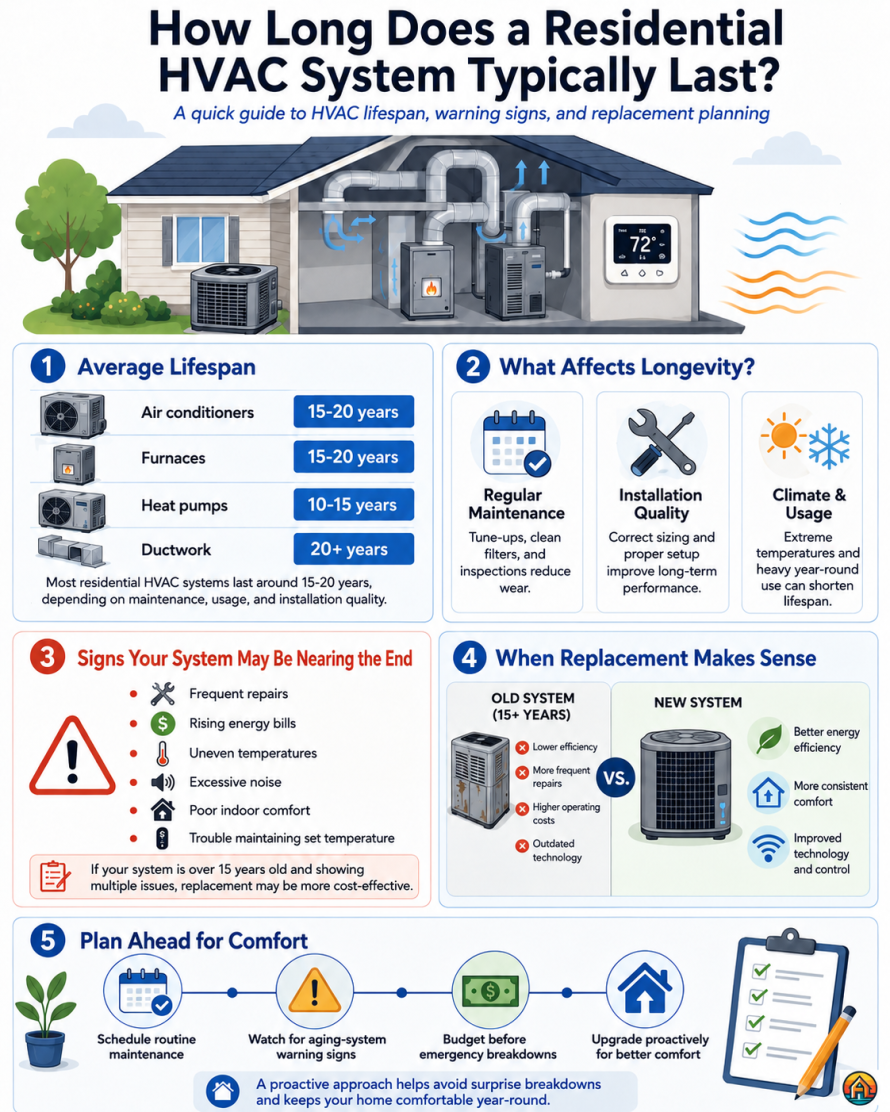
Most residential HVAC systems last between 15 and 20 years. However, the exact lifespan depends on several factors, including the type of equipment, maintenance history, usage patterns, and installation quality.
Generally speaking:
- Air conditioners typically last 15–20 years.
- Furnaces often last 15–20 years, with some well-maintained units exceeding 20 years.
- Heat pumps usually last 10–15 years because they operate year-round.
- Ductwork can last 20 years or more when properly maintained.
As systems age, components naturally wear down, leading to decreased efficiency and increased repair needs.
Factors That Affect HVAC Longevity
Regular Maintenance
One of the biggest factors influencing HVAC lifespan is maintenance. Routine inspections, filter replacements, and seasonal tune-ups help keep equipment operating efficiently and reduce unnecessary wear on critical components.
Neglecting maintenance can cause minor issues to develop into major problems that shorten the life of the system.
Installation Quality
Even the most advanced HVAC equipment can experience premature failure if it’s installed incorrectly. Proper sizing, airflow calculations, and system setup all play important roles in long-term performance. This is why many homeowners carefully research Indianapolis HVAC installation services when replacing aging equipment.
A correctly installed system operates more efficiently and often lasts longer than one that was improperly sized or installed.
Climate and Usage
Homes in regions with extreme temperatures often place greater demands on HVAC systems. Indiana experiences both hot summers and cold winters, meaning HVAC equipment works hard throughout much of the year.
Frequent operation naturally contributes to wear and tear over time, especially if the system isn’t regularly maintained.
Signs Your HVAC System May Be Nearing the End
Even if your system is still running, certain warning signs may indicate that replacement is approaching:
- Frequent repair calls
- Rising energy bills
- Uneven temperatures throughout the home
- Excessive noise during operation
- Poor indoor comfort
- Difficulty maintaining desired temperatures
If your HVAC equipment is more than 15 years old and experiencing multiple issues, replacement may be more cost-effective than continuing repairs.
When Replacement Makes Sense
While repairs can extend the life of an HVAC system, there comes a point when investing in new equipment becomes the smarter financial decision. Modern systems offer significant improvements in energy efficiency, comfort, and technology compared to units installed decades ago.
Homeowners exploring Indianapolis HVAC installation services often discover that newer systems can reduce monthly utility costs while providing more consistent indoor comfort.
Planning Ahead for Comfort
Understanding the typical lifespan of an HVAC system allows homeowners to prepare for future replacement before an emergency occurs. By scheduling regular maintenance and paying attention to signs of aging equipment, you can maximize the life of your current system while planning confidently for future upgrades. A proactive approach helps ensure year-round comfort and avoids unexpected breakdowns when you need your HVAC system most.