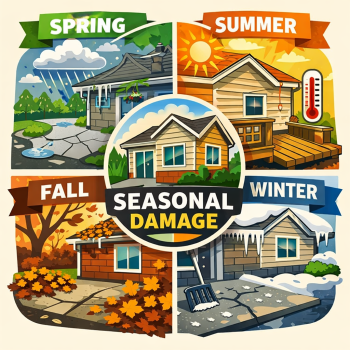
Your structure at home is always at war with the elements. There is interior protection from insulation and climate control, but the outside of your home is left to bear the brunt of what the seasons throw at it. From heavy spring rains to intense summer sun, falling autumn leaves to lingering winter moisture, each season leaves its report on concrete, siding, decks, and other outdoor features.
As you go through the seasonal changes, note how they play out on your home’s exterior, which in turn helps you to be proactive with maintenance and repair all year round. Care will see to it that your surfaces live out their full life span and, in addition, maintain your home’s appeal.
Spring: Rain, Humidity, and Surface Runoff
Spring may bring an end to winter’s cold, but it also ushers in lots of rain and increased humidity. Though rain may seem harmless at first, in the long term it causes issues for exterior elements.
Concrete driveways and walkways are very prone to damage. Water that gets into tiny cracks will over time cause them to open up more as temperature changes. Also, at no time that ice is present do these structures see dry conditions, which in turn promote the growth of algae, mildew, and moss. That which changes the color of the surface also creates slippery areas, which present safety issues.
Siding made of vinyl and wood is a great place for moisture to be trapped behind panels if drain systems are at capacity. Also in the spring pollen has a tendency to accumulate on homes, which, when mixed with rain, produces a sticky film that clings to walls and windows. Over time this accumulation causes finish degradation and staining.
Gutters and downspouts are very important this season. If they are blocked by leftover fall debris, water will spill out and pool at the foundation. Which in turn increases the risk of soil erosion, foundation stress, and basement moisture issues.
Regular inspections are done in the spring, which catch the early stages of water damage. Gutters are cleaned out, the caulk around windows is checked, and small concrete cracks are repaired, which in the end will prevent larger-scale repairs later in the year.
Summer: Heat, UV Exposure, and Surface Expansion
Summer’s intense sun and heat bring out a different issue. Over time, UV rays cause degeneration in a number of external materials. Color is lost in paint, wood dries out to the point of splintering, and vinyl siding will warp at extreme temperatures.
Concrete also at high temperatures is a reactant. As it gets hotter, materials expand. After hot days that are followed by cool evenings, repeated expansion and contraction is seen, which in turn puts stress on joints and existing cracks. Over time this diminishes the structural integrity of driveways, patios, and sidewalks.
Decks and fences see some of the worst of what summer has to offer. Wood loses moisture, which in turn causes it to shrink and crack. As for metal fixtures, they may heat up to a point where they expand slightly, which in turn will cause fasteners and brackets to loosen.
Outdoor features such as pool decks and retaining walls are also subject to chlorine splashes from pool chemicals, irrigation from the sprinklers, and constant sun exposure. Without regular maintenance, surfaces may fade or become brittle.
In summer it is best to apply protective sealants and repaint, which require UV protection. Also keep surfaces clean of debris for proper coating adhesion, which in turn reduces long-term wear.
Fall: Leaves, Organic Debris, and Staining’
Autumn may be the most beautiful season, but it also brings out issues with your home’s exterior. Problems are seen when leaves, which collect on driveways, patios, or decks, bring in excess moisture, which in turn causes the leaves to decompose. As they break down, they produce tannins and other organic materials that cause staining of concrete and wood.
Clogged gutters in the fall are a big issue. Leaves that fall block water passage, which in turn causes rain to spill over the sides and run down exterior walls. This may lead to water getting in behind the siding or fascia, which in turn causes rot and mold.
In some cases concrete and paved surfaces will see large spots of discoloration where leaves had fallen for long periods of time. Once they start to set in, these marks may be hard to remove.
Fall is a key time for preventive cleaning. It is seen to that which falls out is removed, which in turn helps to reduce staining and moisture in. Also, it is a good idea to go over outdoor lighting, railings, and walkways before winter, which makes maintenance more difficult.
Winter: Moisture, Freeze-Thaw Cycles, and Surface Stress
Moisture and cold temperatures. As water gets into small cracks in concrete and freezes, it expands. This freeze-thaw cycle, which goes on over time, causes cracks to open up wider and also leads to what is known as surface spalling, in which the top layer of concrete comes away.
Siding and brick exteriors also see damage in winter. It is seen that moisture that gets in through small gaps will freeze and expand, which in turn weakens mortar joints and sealants. Ice dams on roofs also push water under shingles at the same time they affect both roofing and exterior walls.
Driveways and walkways also see different issues with de-ice chemicals. It is seen that while they do a good job at breaking up ice, some salts used in these products also cause wear and damage, especially to older or unsealed concrete.
Winter maintenance is a preventive effort. Cracks are sealed as soon as they appear, drainage is improved, and it is seen to that water doesn’t have extended access to the surface, which in turn reduces seasonal damage.
The Role of Seasonal Cleaning
Through the course of the year, dirt, algae, mold, pollen, and debris accumulate. Each season brings different issues, but in general, consistent cleaning is key to preventing minor accumulation from turning into permanent damage.
A professional cleaning from a reputable power washing company can be part of a broader seasonal maintenance plan. While power washing does improve the look, it also removes organic growth, dirt, and other contaminants that may cause staining, surface breakdown, or even slip and fall issues. When used right for the material you have, it brings a surface back to its original state without in any way damaging it.
In spring and in the fall you’ll see an increase in exterior cleaning, which follows heavy moisture and leaf drop. By getting to the buildup early, homeowners reduce the algae, which in turn preserves the look of their concrete, siding, decks, and fences.
Long-Term Impact on Property Value
The season, which brings about the weather changes, doesn’t only affect how your home looks but also plays a role in its structural health and the overall value of the home. Tiny cracks in concrete may grow into big, expensive repair issues. Weathered siding or stained driveways, which reduce the appeal of your home’s exterior. Also, left unchecked, moisture damage may require in-depth and very expensive remediation.
Routine maintenance and seasonal care are a more economic option than large-scale renovation. Minor issues are addressed as they come up, which in turn gets materials back to the expected performance and also increases their life span.
Buyers today pay close attention to the exterior condition. A home that has had care taken of it shows in the driveway, which is well maintained, clean siding, and intact gutters. This in turn influences the home’s resale value and time spent on the market.
Staying Ahead of the Seasons
Each season sees the same sets of issues play out, and pro homeowners adapt their maintenance routines to it. In spring there is the need for moisture checks and cleaning. In summer it is all about UV protection and surface sealing. Come fall, leaves and debris are managed and gutters cleaned out. And in winter attention is paid to cracks and drainage to reduce freeze-related damage.
Through the study of how the seasons play out on your home’s exterior, a more proactive approach to care may be adopted. With consistent attention and timely maintenance, your home will be that much more resistant to rain, heat, debris, and cold, which in turn will preserve its look and structure from year to year.