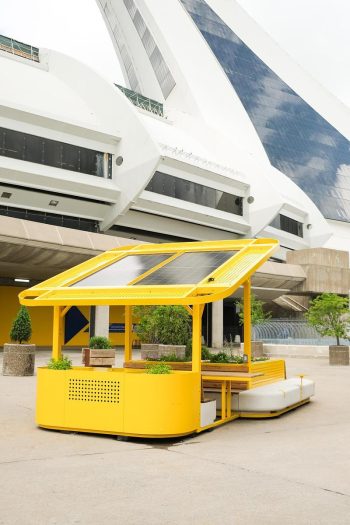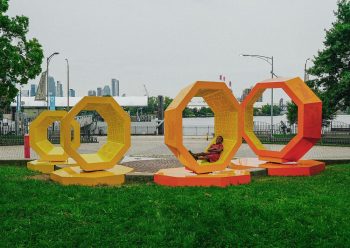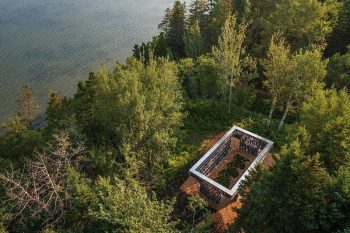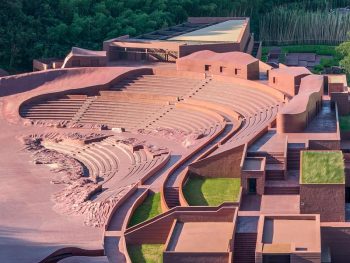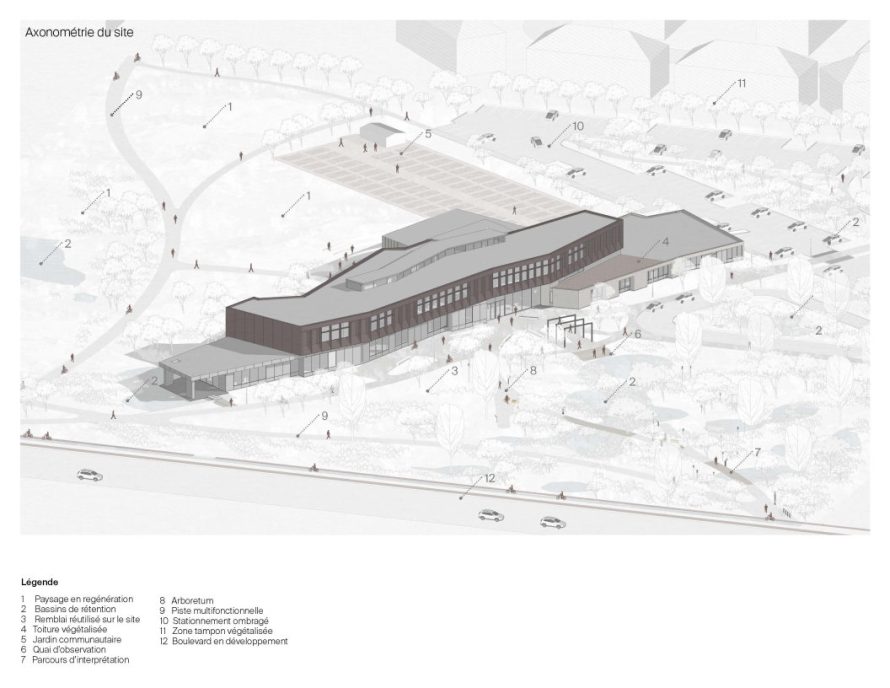
The Espace citoyen des Confluents in Laval, Canada, designed by Projet Paysage in collaboration with Cardin Julien, redefines how post-industrial land can evolve into a civic ecosystem. Rather than masking its past, the project embraces transformation, turning a former petrochemical brownfield into a living landscape where ecological regeneration shapes everyday public life. The result is not a static park, but a system that grows, adapts, and matures over time.
Reclaiming a Contaminated Territory
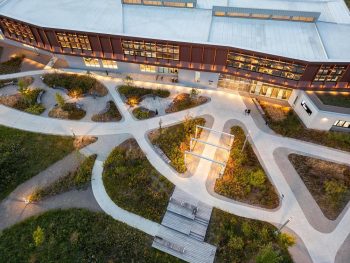
Once occupied by a BASF petrochemical facility, the site carried decades of environmental degradation. Instead of imposing a rigid masterplan, the design team developed a regenerative strategy rooted in the site’s existing conditions. Fertile clay soils, natural water retention capacity, and proximity to wetlands became drivers for a new ecological framework, allowing nature to gradually reclaim its role within the territory.
More than a cleanup effort, the intervention restores identity. The land, once forested and later industrialized, now re-emerges as a hybrid civic landscape where biodiversity and public use coexist. This layered transformation acknowledges history while shifting its trajectory toward resilience.
Water as Structuring Infrastructure
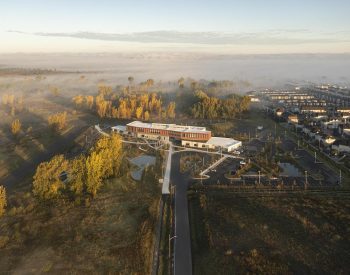
At the core of the project lies a comprehensive hydrological system that captures and manages 100% of rainwater and runoff. Through permeable paths, drainage trenches, and interconnected basins, water is slowed, filtered, and redistributed across the site. These basins double as wetlands, creating habitats that support wildlife and reinforce ecological cycles.
Even infrastructural elements contribute to this system. A triangular parking layout minimizes impervious surfaces, while sedimentation wells filter runoff before it enters the basin network. The landscape itself becomes infrastructure, quietly performing environmental functions without compromising spatial quality.
A Landscape that Evolves Over Time
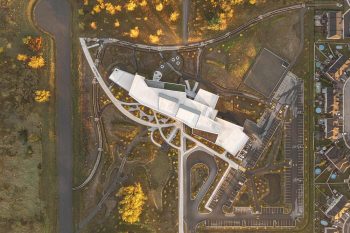
Unlike conventional parks designed for immediate visual impact, this project embraces temporality. Vegetation is allowed to establish itself gradually, with spontaneous growth playing a key role in shaping the environment. Over 300 trees across 25 species have been planted, but the landscape is intentionally unfinished—designed to evolve with the seasons.
Footbridges and observation platforms invite users into this changing ecosystem, offering moments of immersion within an urban setting. The shifting textures, sounds of water, and layers of vegetation create a sensory experience that contrasts sharply with the surrounding city.
Architecture and Landscape as One System
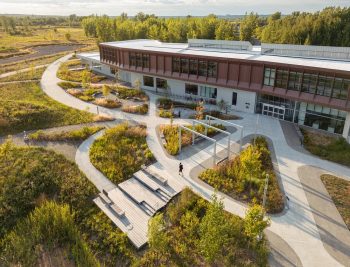
From the outset, integrated design guided the collaboration between Projet Paysage and Cardin Julien. The civic buildings—housing a library, cultural spaces, and municipal services—are not isolated objects but part of a continuous spatial network. Their east-west orientation optimizes passive solar gain while aligning with the site’s hydrological and circulation systems.
This synergy ensures that architecture and landscape reinforce each other. The built form anchors the site, while the landscape directs movement and defines rhythm. Certified LEED v4 Gold, the project demonstrates how sustainable design can operate at both environmental and civic scales, positioning Espace citoyen des Confluents as a long-term urban catalyst.
| Technical Sheet | |
|---|---|
| Project Name | Espace citoyen des Confluents |
| Location | Laval, Quebec, Canada |
| Client | City of Laval |
| Opening | Fall 2024 |
| Site Area | 13 acres |
| Scope of Intervention | 5 acres |
| Landscape Budget | $3 million CAD |
| Certification | LEED v4 Gold |
| Landscape Architect | Projet Paysage |
| Architecture | Cardin Julien |
| Engineering | WSP |
| Land Surveying | Groupe SR |
| Sustainability Consulting | Système Énergie TST |
| General Contractor | Geyser Group |
| Photography | Vincent Brillant, David Boyer |
| Video | Pierre-Alexandre Guay |