The Kimpton Los Monteros Hotel in Marbella, Spain has undergone a meticulous transformation, reimagining its public spaces through a sensitive yet bold design by Barcelona-based studio EL EQUIPO CREATIVO. Known for their concept-driven interiors across the hospitality sector, the studio brings a nuanced approach to the renovation—one that honors both local identity and the building’s original 1970s spirit.
From 1970s Bones to Contemporary Layers

The original architecture of the hotel dates back to the 1970s, and rather than overwrite that era’s aesthetic, EL EQUIPO CREATIVO chose to reinterpret it. Their design embraces the geometry, built-in niches, and patterned elements that defined the period. Instead of a nostalgic replica, these features are woven into a layered narrative that respects both past and present.
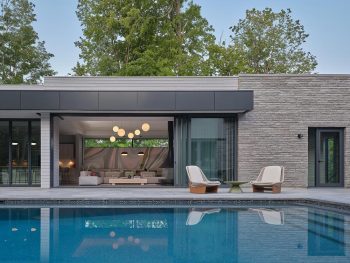
The result is a cohesive spatial language where Mediterranean light, earthy materials, and retro-inspired geometry live side by side. From the perforated wooden elements that filter sunlight to the stepped levels around the pool, the architecture invites guests to inhabit the building much like one would a home—fluidly, casually, and with curiosity.
A Dialog with the Andalusian Landscape

The design draws deeply from Andalusia’s visual culture: the greens of native vegetation, the soft blues of sea and sky, and the intense yellows of sunlight. These regional cues are not treated as decorative accents but rather as structural elements embedded in every layer of the project.
This is especially evident in the hotel’s central Andalusian patio. EL EQUIPO CREATIVO preserved its function as an anchor point while simplifying its architectural detailing and amplifying its natural presence. A sculptural water feature occupies the center, serving not just as ornament but as a cooling and auditory device—tying architecture and sensory experience together.
Spaces that Shift from Daylight to Dusk

Much of the hotel’s design hinges on contrast and transformation. The Azul Bar, active since 1962, is reinvigorated with Picasso-inspired murals and a tactile palette of blue ceramics. Shades shift throughout the day, playing with artificial and natural lighting to modulate mood. Likewise, Jara Restaurant functions like an architectural garden—white walls give way to ceramic greens, and traditional Andalusian tilework appears near the kitchen, signaling a shift in program without hard partitions.
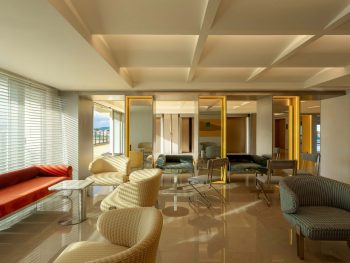
Upstairs, Escondido—the rooftop bar—uses terracotta tones and stepped platforms to define zones for social interaction. The layout isn’t purely aesthetic; it also guides movement, framing views of the Mediterranean and transforming with time, from relaxed lounging to evening gatherings.
An Artistic Lens on Hospitality

Artistry is embedded throughout, not as gallery-style placement but as a design principle. Murals, curved forms, and bespoke ceramic elements echo the works of Picasso and other Spanish modernists. These gestures position the hotel as both a public space and a private retreat, fusing the functionality of a hospitality environment with the emotional depth of a curated home.
Rather than showcasing luxury in overt terms, the design emphasizes locality and storytelling. The final result is a hotel where the architecture performs quietly but precisely—establishing a tone of elegance without pretense, and rooting visitors in a space that feels distinctively of Marbella.
Technical Sheet
| Aspect | Details |
|---|---|
| Interior Design | EL EQUIPO CREATIVO |
| Partners | Oliver Franz Schmidt, Natali Canas del Pozo, Lucas Echeveste Lacy |
| Team Leaders | Daniel Trujillo, Marcos Merino |
| Client | Kimpton Hotels, IHG Hotels, Stoneweg Living |
| Lighting | MMaslighting |
| Architecture | GCA Architects |
| Project Management | CBRE |
| Photography | Veerle Evens |