Le local Design has transformed Maison du Ruisseau into a bright and functional family home, proving that renovation can respect history while embracing sustainability. Situated in Sutton, Canada, the project balances the charm of a traditional cottage with the needs of contemporary living. By retaining the spirit of the original structure, Le local Design shows that enhancement, rather than demolition, can deliver both comfort and ecological responsibility.
Respecting the Past While Designing for the Future

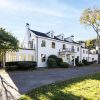
The renovation of Maison du Ruisseau demonstrates how an old dwelling can evolve without losing its essence. The owners wanted to preserve the cottage’s identity while resolving structural issues such as poor drainage and limited natural light. Instead of opting for a total rebuild, the design team embraced the existing framework. Through thoughtful interventions, the project achieved a balance between vernacular architecture and modern comfort, keeping the soul of the house alive.
A Sensitive Architectural Transformation

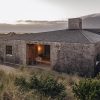
One of the most striking aspects of the project is its respectful yet bold extension. A twin volume with a gabled roof complements the main house, connected by a central section featuring an offset flat roof. This contrast creates a dynamic dialogue between old and new. The materials—charred wood using the Japanese shou sugi ban technique, paired with white cedar shingles—enhance durability while offering a fresh, contemporary aesthetic.
Light, Flow, and Family Living

To make the house suitable for a family of five, spaces were reimagined with functionality in mind. The new vestibule provides an organized entry point for outdoor gear, while built-in storage reduces clutter. Natural light floods the interiors thanks to a new large skylight and expansive bay windows. Preserved beams and wood ceilings blend seamlessly with the streamlined kitchen and custom furnishings. The extension adds a second living room, games area, and dormitory, ensuring both privacy and conviviality.
Sustainability at the Core

Environmental responsibility guided every decision. Local materials such as wood, aluminum, and pine were prioritized, ensuring longevity and reducing the project’s footprint. The landscaping, designed by La Roche Posée, integrates terraces, trails, and a pergola that connect the home to its wooded surroundings. This continuity blurs the boundary between indoors and outdoors, offering a lifestyle deeply attuned to nature. Maison du Ruisseau thus becomes a model of how renovation can be a creative and sustainable alternative to new construction.
Through Maison du Ruisseau, Le local Design proves that architectural renewal does not mean erasing history. Instead, it shows how the constraints of existing structures can inspire innovation, resulting in a home that is warm, modern, and enduring.
Technical Sheet
| Project Name | Maison du Ruisseau |
| Location | Sutton, Canada |
| Project Type | Renovation and extension |
| End of Construction | 2023 |
| Renovated Area | 785 sq. ft. (per floor) |
| Extension Area | 660 sq. ft. + 352 sq. ft. |
| Design Team | Le local Design |
| Interior Design | Le local Design |
| Photography | James Brittain |
| Contractor | Simon Fortin |
| Custom Woodwork | Oliver Schmid |
| Landscape Architecture | La Roche Posée |
| Facade | White-painted cedar shingles (Maibec) |
| Exterior Cladding | Charred wood (shou sugi ban) |
| Roof | Aluminum, MAC Métal Architectural |
| Windows | Wood/aluminum (renovated), all-aluminum (extension) |
| Floors | Pine wood, heated concrete, sanded original wood |
| Plumbing Fixtures | Baril Design |
| Ceramics | Hexagonal mosaic tiles, Ceratec |
| Countertops | Concrete (Béton Johnstone), birch wood |
| Lighting Fixtures | EQ3, Multi Luminaire |
| Furniture | Built-in kitchen and mudroom by Oliver Schmid |
| Heating | Electric (original section) |