Valencia House in Porto Feliz, Brazil, is a countryside retreat designed by Padovani Arquitetos as a refined yet welcoming summer residence. Conceived as a place to gather family and friends, the project explores a fluid relationship between architecture and landscape, dissolving boundaries through open, permeable social spaces. From the outset, Padovani Arquitetos positioned the house as a contemporary interpretation of Brazilian living, where climate, topography, and materiality shape both form and experience.
Embedded in the Topography

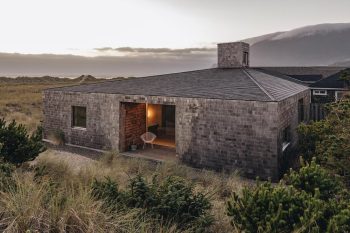
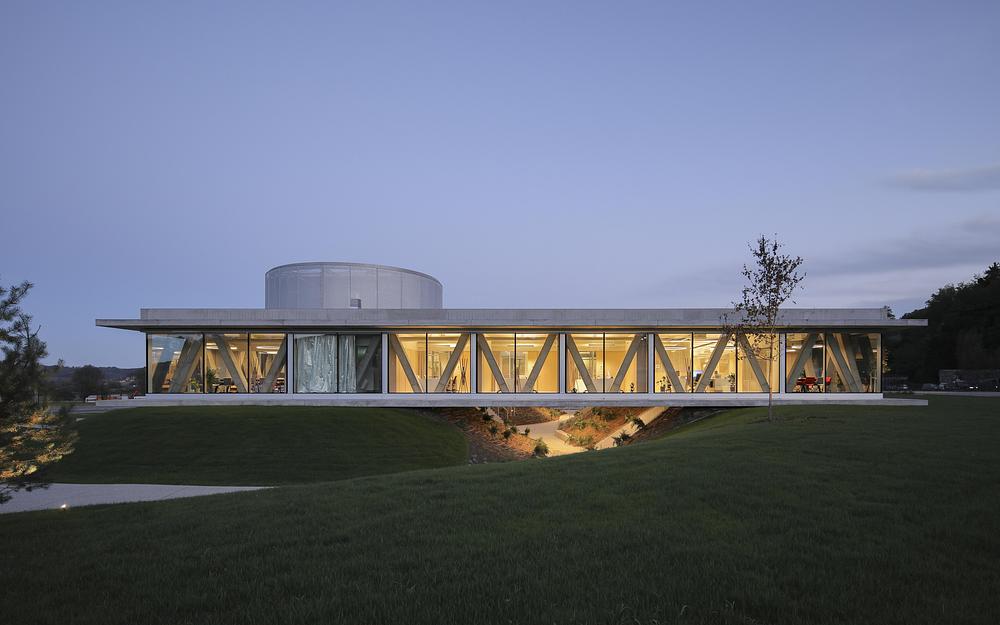
Set within the rolling countryside of Sao Paulo state, the residence responds directly to its natural slope. Instead of imposing a rigid volume onto the terrain, the design partially embeds the main block into the land, reducing perceived height and enhancing horizontal emphasis. This strategy allows the three-story program to feel grounded and proportionate, minimizing vertical dominance while maintaining generous internal areas.
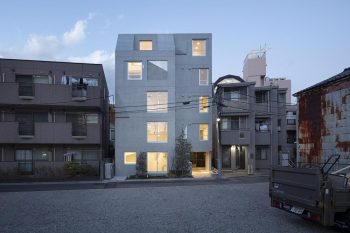
The composition unfolds through the overlay of adjacent volumes, creating a light and distinctive volumetry. Slender metal eaves define clean horizontal lines, counterbalancing the substantial built area of 1,500 m2. The result is a precise calibration of scale, where structure, terrain, and proportion operate in dialogue rather than conflict.
Social Spaces and Panoramic Framing

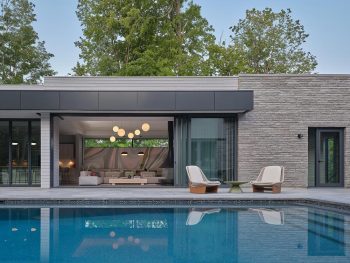
The core ambition of Valencia House is to cultivate togetherness. Spacious living and dining areas extend seamlessly toward terraces and outdoor lounges, reinforcing indoor-outdoor integration. Large openings frame panoramic views of the surrounding countryside, transforming the landscape into a continuous visual backdrop.
Seven suites provide privacy for guests, while recreational amenities such as a pool and gym enrich the everyday experience. The pool terrace acts as both a leisure zone and a transitional platform, mediating between architecture and open landscape. Each social space is calibrated to encourage relaxed circulation and collective use without compromising comfort.
Materiality and Brazilian Identity

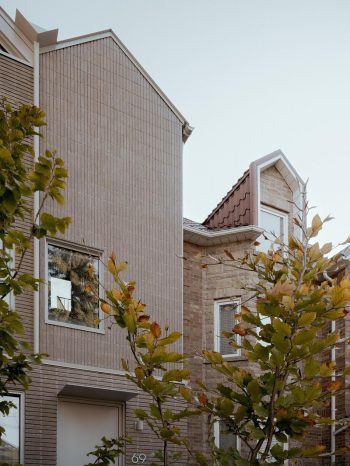
Although the site lacks strong architectural references in its immediate context, the project intentionally embraces a Brazilian architectural language through material choice. Wood and stone are employed as primary elements, reinforcing a vernacular sensibility while supporting durability and climate responsiveness.
These materials contribute warmth and tactile richness to the interiors and exteriors alike. Rather than mimicking regional styles, the design extracts their essence, translating it into a contemporary expression. The careful balance between raw textures and refined detailing establishes a dialogue between tradition and modernity.
Process, Precision, and Experience

The conceptual foundation originated from early sketches that defined massing and spatial logic. Continuous evolutionary studies refined the interplay of volumes, views, and circulation. Respect for topography and proportion guided each decision, ensuring that aesthetics and performance remained aligned.
In collaboration with Suite Arquitetos for interiors and Maria Joao d’Orey for landscaping, Padovani Arquitetos shaped not only a physical structure but a holistic living environment. The residence ultimately reflects the studio’s commitment to crafting spaces that integrate functionality and poetics, reinforcing their distinctive architectural narrative.
| Project Name | Valencia House |
| Architecture | Padovani Arquitetos |
| Interiors | Suite Arquitetos |
| Landscaping | Maria Joao d’Orey |
| Location | Porto Feliz, Sao Paulo, Brazil – Google Maps |
| Year | 2024 |
| Size | 1,500 m2 |
| Photography | Fran Parente | Ricardo Bassetti |