The exhibition Built Environment: An Alternative Guide to Japan arrives at UQAM’s Centre de design as a wide-ranging presentation of Japanese architectural resilience. As an international travelling showcase, Built Environment: An Alternative Guide to Japan brings together 80 projects that reveal how Japan’s buildings, infrastructure, and landscapes adapt to a challenging natural environment. Curated by Shunsuke Kurakata, Satoshi Hachima, and Kenjiro Hosaka, the exhibition introduces visitors to a nuanced reading of Japanese territory through architecture, civil engineering, and landscape design. More information can be found at Built Environment: An Alternative Guide to Japan.
A Broader Lens on Japan’s Architectural Culture

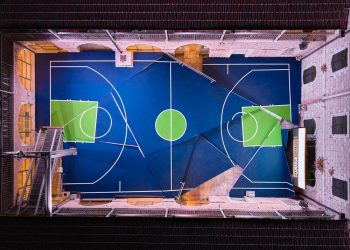
Exploring Japanese regions from Hokkaido to Kyushu, the exhibition highlights how architecture and infrastructure intertwine with a landscape shaped by earthquakes, typhoons, and volcanic activity. Through photographs, models, and videos, the curators foreground an “alternative guide” that goes beyond iconic buildings. Instead, the narrative looks at everyday structures, civil engineering works, and community-based landscapes that collectively shape the built environment. Projects by Shigeru Ban, Kengo Kuma, Yoshio Taniguchi, Isamu Noguchi, and Arata Isozaki provide recognizable anchors in a survey that spans more than a century.
Exhibition Design Inspired by the Archipelago

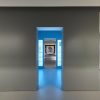
Inside UQAM’s Centre de design, the 80 selected works are displayed on folded plywood structures reminiscent of origami and modular landforms. This layout echoes the Japanese archipelago, inviting visitors to navigate the room as if traveling between the islands. The design amplifies the exhibition’s focus on environmental context and geographic diversity. Video projections further immerse audiences, turning the gallery into a landscape of shifting information and spatial readings.
Programs on Resilience and Japanese Metabolism

A roundtable titled The Resilience of the Built Environment extends the exhibition’s themes, offering Quebec perspectives on climate change, natural hazards, and adaptive design. Organized with UQAM’s Pôle sur la ville resiliente, the discussion gathers experts working at the intersection of urban research and environmental transformation. Complementing this is a student exhibition on Metabolism, the influential Japanese postwar movement focused on organic growth and modularity. Twenty wooden models produced by UQAM students reinterpret key Metabolist proposals through contemporary thinking.
A Window into Culture, Territory, and Design Approaches

By framing Japan through its built environment, the exhibition bridges architecture, geography, and cultural history. The curators’ approach encourages visitors to understand design not as isolated masterpieces but as part of a living system. As the first French-language presentation worldwide, the exhibition reinforces UQAM’s commitment to international exchange and design literacy. Built Environment: An Alternative Guide to Japan ultimately invites Montreal audiences to reflect on resilience, identity, and the evolving relationship between nature and the human-made world.
Exhibition Timeline
| Item | Details |
|---|---|
| Main Exhibition | November 20, 2025 – January 25, 2026 |
| Roundtable Discussion | January 21, 2026, at 2 p.m. — UQAM’s Centre de design |
| Student Exhibition | Starts November 25, 2025 — Lobby of UQAM’s Centre de design |
| Weekly Public Seminar | Every Tuesday at 1:30 p.m., Nov–Dec 2025 |
| Admission | Free |