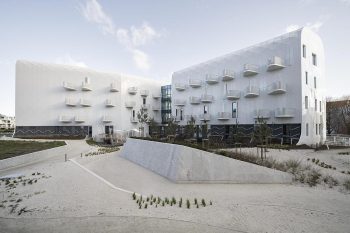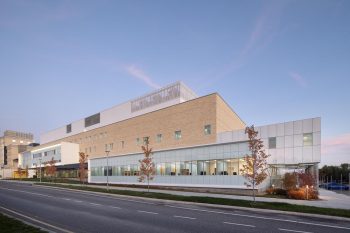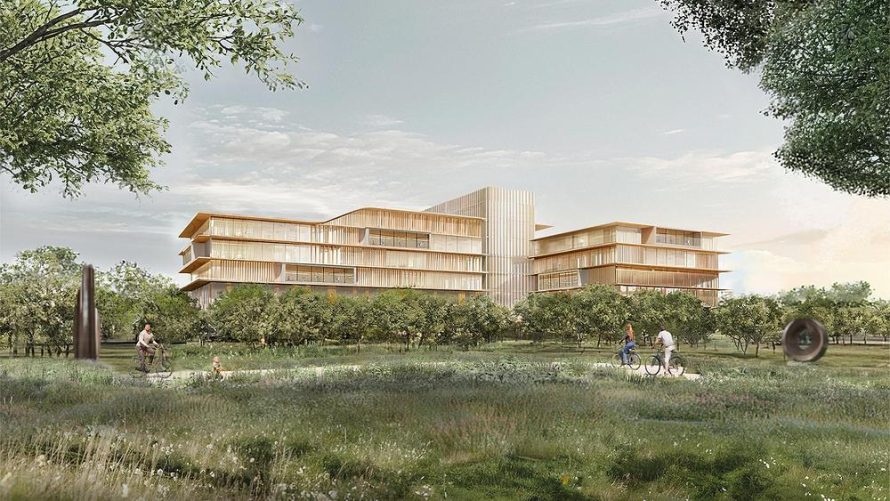
The Alice L. Walton Foundation has selected global design firm CannonDesign and landscape and planning specialist EDSA to envision the future Bentonville Health Care Campus. Planned for a 100-acre site east of downtown Bentonville, the project reframes health care as an experience rooted in daily life, not just treatment. Architecture, landscape, and community are woven together to support a holistic idea of healing.
Whole Health Vision for Bentonville

The campus emerges from a long-term collaboration between the Foundation, Mercy, Heartland Whole Health Institute, and Cleveland Clinic, all focused on expanding access to whole-person care across the Heartland. Rather than replicating conventional hospital typologies, the development is imagined as an integrated environment where clinical expertise, education, and community ties can strengthen regional well-being. Buildings, paths, and gathering spaces are arranged to encourage movement, social connection, and a sense of calm.
At the heart of the plan is a Center for Advanced Specialty Care that both anchors and humanizes the campus. The architecture is intended to feel open and approachable, with daylight, views, and intuitive circulation guiding visitors through the site. This approach positions the campus as a civic presence in Bentonville, signaling that specialist care, research, and everyday wellness are part of the same continuous health journey, not separate clinical islands.
Living-Centered Architecture and Care

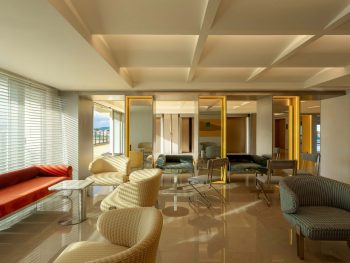
CannonDesign applies its Living-Centered Design framework to question how spaces can actively support healthier choices and behaviors. Waiting areas become places for quiet reflection, not just transitional zones. Circulation routes double as gentle walking loops, encouraging light activity while reducing stress. The proposed Center for Advanced Specialty Care is conceived as a flexible, future-ready environment that can adapt as medical technologies, care models, and community needs evolve over time.
Materials such as warm wood, stone, and translucent glass help soften the boundary between interior and exterior. These choices echo the textures of the Ozark landscape and reduce the institutional feel often associated with medical campuses. Thoughtful acoustic control, intuitive wayfinding, and framed views to nature work together to support both emotional comfort and practical clarity for patients, staff, and visitors navigating complex care journeys.
Landscape, Art, and Ecological Wellness

EDSA’s role is to articulate the campus as a continuous restorative landscape rather than a backdrop to buildings. A network of trails and pedestrian paths choreographs movement from public edges into more contemplative interior spaces. Along the way, shaded seating, planting zones, and outdoor rooms encourage informal gatherings, quiet breaks, and gentle exercise that reinforce everyday wellness.
Water becomes a unifying presence and an active part of the sustainability agenda. Carefully managed stormwater is captured, cleansed, and reintroduced to the landscape as pools, channels, and reflective surfaces. These elements express the rhythm of the Arkansas climate while supporting ecological resilience. Integrated art moments across the campus add another layer of meaning, inviting patients and visitors to engage with the site on emotional, cultural, and spiritual levels.
A Connected Health Ecosystem in Northwest Arkansas

The Bentonville Health Care Campus is not an isolated project, but a key node in a broader ecosystem that includes Heartland Whole Health Institute and Alice L. Walton School of Medicine at Crystal Bridges. Educational programs, payment reform efforts, and care delivery models tested across these institutions can be translated directly into built space on the new campus. This tight alignment between mission, research, and environment helps transform the site into a living laboratory for health innovation and community-focused care models.
As the vision advances, CannonDesign and EDSA position the campus as a catalyst for regional health innovation, not just another medical facility. Their collaboration seeks to create a place that feels less like a destination for treatment and more like a landscape for living well, where the architecture, paths, and planted spaces quietly support people over a lifetime of experiences in Northwest Arkansas.
| Project | Bentonville Health Care Campus |
| Location |
Bentonville, Arkansas, United States |
| Client | Alice L. Walton Foundation |
| Architect | CannonDesign |
| Landscape / Planning | EDSA |
| Site Area | Approx. 100 acres |
| Program | Center for Advanced Specialty Care, whole health facilities, integrated landscape, trails, community green spaces |
| Design Focus | Whole health, living-centered design, restorative landscape, sustainability, community connection |
| Status | In design |
| Key Collaborators | Mercy, Heartland Whole Health Institute, Cleveland Clinic |