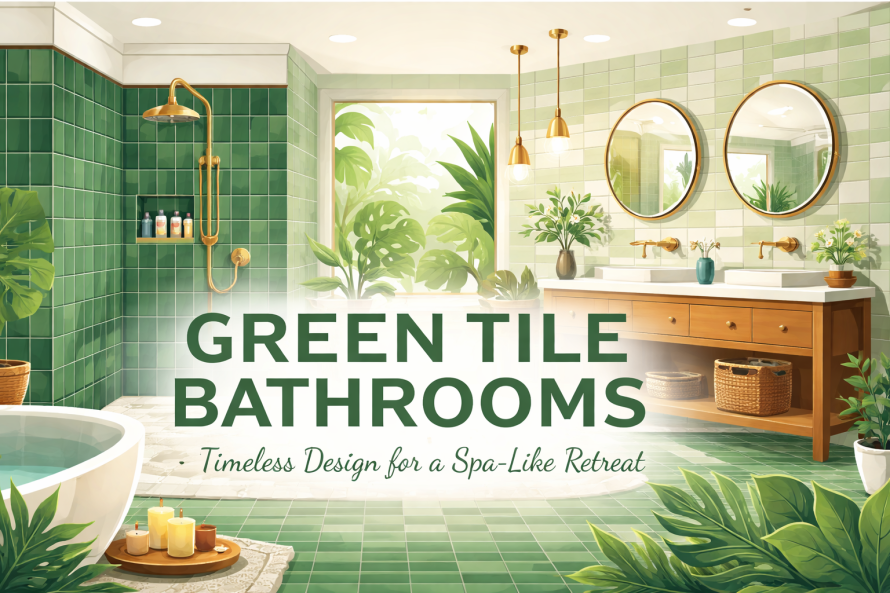
Green has quietly become one of the most powerful colors in modern bathroom design. Once considered too bold or too unconventional, green is now widely used by interior designers to create bathrooms that feel calm, organic, and visually distinctive. From soft sage walls to deep emerald showers, green tile can completely transform the mood of a space.
Bathrooms are no longer treated as purely functional rooms. They are designed as personal retreats — places to reset and recharge. Tile choice plays a major role in shaping that experience, and green offers a unique balance of freshness and warmth that few other colors can match. When used correctly, green tile creates a bathroom that feels both stylish and enduring rather than trendy and short-lived.
This guide explores how to design with green tile like an expert — including shade selection, layout strategy, materials, finishes, and pairing techniques that produce a polished result.
Why Green Is Perfect for Bathroom Design
Color psychology plays a major role in interior environments, and green consistently ranks among the most calming colors. It is associated with nature, renewal, and balance — qualities that align perfectly with the purpose of a bathroom.
Unlike stark neutrals, green introduces personality without overwhelming the senses. It can act as a soft backdrop or a dramatic focal element depending on the shade and tile style you choose.
Designers favor green tile because it:
- Feels restful and restorative
- Connects visually with water and natural materials
- Works with both warm and cool palettes
- Complements metal finishes and wood tones
- Ages well compared to trend-driven colors
When thoughtfully executed, green tile bathrooms achieve a spa-like atmosphere while still feeling grounded and livable.
Selecting the Right Shade of Green
Not all greens behave the same way once installed. Lighting, room size, and surrounding materials significantly influence how a shade appears. Choosing the right tone is one of the most important design decisions.
Light Greens
Soft greens such as sage, mint, and pale eucalyptus are ideal for smaller bathrooms or spaces with limited natural light. These tones reflect light effectively and help the room feel open and breathable. They work especially well with white fixtures and light wood finishes.
Mid-Tone Greens
Olive, moss, and muted botanical greens are extremely versatile. They add color presence without dominating the space. These shades are excellent for homeowners who want character but not drama. They also tend to hide water spots and minor wear better than very light colors.
Dark Greens
Deep emerald, forest, and bottle green create a luxurious, high-contrast look. They are best used in larger bathrooms or as feature surfaces such as shower walls or vanity backdrops. When paired with brass, gold, or matte black hardware, dark green tile can feel rich and architectural.
Tile Shape and Pattern Matter
Color draws attention, but tile shape defines how that color is experienced. The same green glaze can look classic, modern, or artistic depending on the tile format.
Subway tile remains a reliable choice and adapts well to green tones. Installed in stacked, vertical, or herringbone layouts, it can shift from traditional to contemporary easily.
Handcrafted or zellige-style tiles add variation and surface movement. Their slight irregularities catch light differently across each piece, giving green walls depth and texture.
Geometric shapes such as hexagon or penny tiles work particularly well on floors or in shower niches. They introduce pattern without needing multiple colors, which keeps the palette controlled.
Large-format tiles create a clean, seamless appearance with fewer grout lines. This approach suits modern bathrooms where simplicity and visual continuity are priorities.
Strategic Placement for Maximum Impact
One of the most common design mistakes is overusing a strong tile color across every surface. Expert design focuses on placement rather than total coverage.
Shower walls are one of the most effective locations for green tile. They create a focal zone and visually anchor the room. When enclosed with glass, the tile becomes a feature rather than a boundary.
A vanity backsplash or full-height wall behind the sink is another high-impact option. This area naturally draws attention and benefits from color and texture.
Green tile flooring can ground the design, especially when paired with neutral walls. Patterned green mosaics are particularly effective in this role because they disguise daily wear.
Accent applications — such as recessed niches, trim bands, or framed panels — allow you to introduce green without committing to full-wall coverage.
Glossy vs Matte Finishes
Finish selection changes how green tile interacts with light and how it performs over time.
Glossy finishes reflect more light and intensify color saturation. They are excellent for walls and shower surrounds because they brighten the space and are easier to wipe clean. Glossy green tile often feels vibrant and energetic.
Matte finishes create a softer, more contemporary look. They reduce glare and provide better slip resistance, making them a practical choice for flooring. Matte surfaces also tend to hide fingerprints and water marks more effectively.
Many well-designed bathrooms combine both — glossy vertical surfaces and matte floors — to balance beauty and function.
Best Material Pairings With Green Tile
Green tile rarely stands alone. Its success depends on what surrounds it. Pairing materials correctly is what separates amateur design from professional results.
White and off-white elements provide crisp contrast and prevent green from feeling heavy. This includes sinks, tubs, toilets, and painted walls.
Natural wood vanities and shelving add warmth and organic balance. Oak, walnut, and teak are especially strong partners for green surfaces.
Metal finishes dramatically influence the mood. Brass and gold produce a warm, upscale feel. Chrome creates a cleaner, brighter look. Matte black adds modern contrast and definition.
Natural stone and marble introduce subtle variation and texture that complement green’s earthy quality without competing with it.
The Importance of Grout Color
Grout is often treated as an afterthought, but it significantly affects the final appearance of green tile.
White grout creates strong contrast and highlights tile shape. This works well with simple formats like subway tile but can feel busy with complex patterns.
Color-matched grout produces a more seamless, saturated surface where the tile reads as a continuous field of color.
Mid-gray grout offers a balanced middle ground. It softens lines while remaining practical for maintenance.
Darker grout lines create a graphic grid effect and are more forgiving in high-moisture areas.
Testing grout with tile samples before installation prevents costly surprises.
Lighting and Green Tile Behavior
Lighting temperature changes how green appears. Warm light brings out earthy undertones and makes the space feel cozy. Cool light can push some greens toward blue, which may or may not suit your design intent.
Layered lighting — combining overhead, task, and accent sources — gives green tile dimension. Directional lighting is particularly effective on textured or glossy surfaces because it enhances variation and depth.
Always evaluate tile samples under the same lighting conditions that will exist in the finished bathroom.
Long-Term Value of Green Tile Design
Green tile has proven staying power because it bridges trend and timelessness. It references nature, works with enduring materials, and adapts across design styles — from minimalist to vintage to luxury spa-inspired interiors.
Unlike novelty colors that quickly feel dated, green tends to evolve gracefully with changing decor. Fixtures, mirrors, and accessories can be updated over time while the tile remains relevant.
A well-designed green tile bathroom does more than look attractive — it creates an atmosphere. When shade, shape, finish, and placement are thoughtfully aligned, the result is a space that feels intentional, calming, and architecturally strong for years to come.