Bjarke Ingels Group (BIG) has emerged victorious in the international competition to design the new Hungarian Natural History Museum, set to be built in Debrecen. The ambitious project promises an innovative fusion of architecture, nature, and cultural function, shaping a landmark that redefines museum design within an environmental context.
Architect at Work: BIG’s Creative Approach

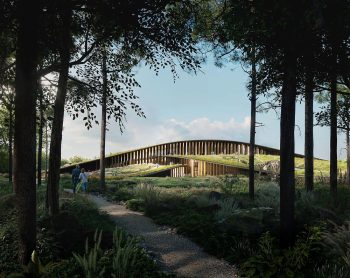
BIG, led by renowned visionary Bjarke Ingels, is known for pushing the boundaries of contemporary design with projects that blend pragmatism and bold form. In this project, the team takes on a unique challenge by situating a major institution within a centuries-old forest, showcasing their commitment to a context-sensitive approach and a seamless integration with the natural surroundings.
Design Concept: Ribbons that Embrace the Landscape

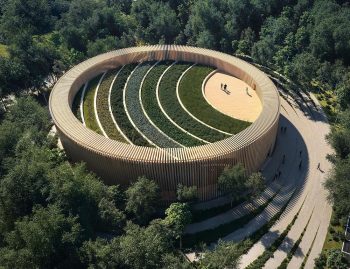
The museum’s design revolves around the idea of overlapping ribbons that emerge gracefully from the forest floor. This concept not only shapes the building’s physical form but also symbolizes the intersection of nature, science, and art, creating a visual narrative that is both fluid and dynamic.
Space and Function: A Multifaceted Destination

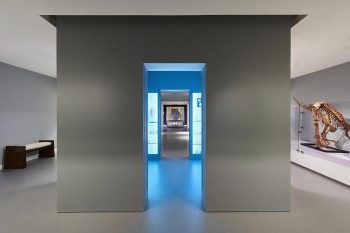
At its core, the Hungarian Natural History Museum is conceived as more than just a repository for exhibits. The interior layout is designed around a radial system, centering on a welcoming reception hall that opens up to five permanent galleries and a dedicated space for temporary exhibitions. Additional amenities such as a library, restaurant, and learning hub aim to foster a community-focused environment that bridges education and exploration.
Sustainable Integration and Community Connection

Sustainability plays a central role in the design, with the museum constructed using mass timber and featuring a façade of locally sourced, charred timber panels that allow the building to blend with its wooded surroundings. The structure, partially sunken into the landscape, incorporates modern energy systems like geothermal loops and photovoltaic panels, ensuring energy efficiency and a reduced environmental footprint while enhancing community connectivity through green design and biodiversity.
| Technical Sheet | Details |
|---|---|
| Name | Hungarian Natural History Museum |
| Size | 23,000 m˛ |
| Location | Debrecen, Hungary |
| Client | DIF Debrecen |
| Collaborators | Vikár és Lukács Építés Stúdió, Museum Studio – London, TYPSA |
| Partner in Charge | Bjarke Ingels, Hanna Johansson |
| Project Leader | Jakub Fratczak |
| Project Team | Alessandra Baroni, Camila Antonella Mina, Camila Pagnoncelli, Dominika K?opotek, Gian Marco Prisco, Juan Carpio, Nicolas Bachmann Bellido, Olivia Sarra Gómez, Angel Barreno Gutiérrez |